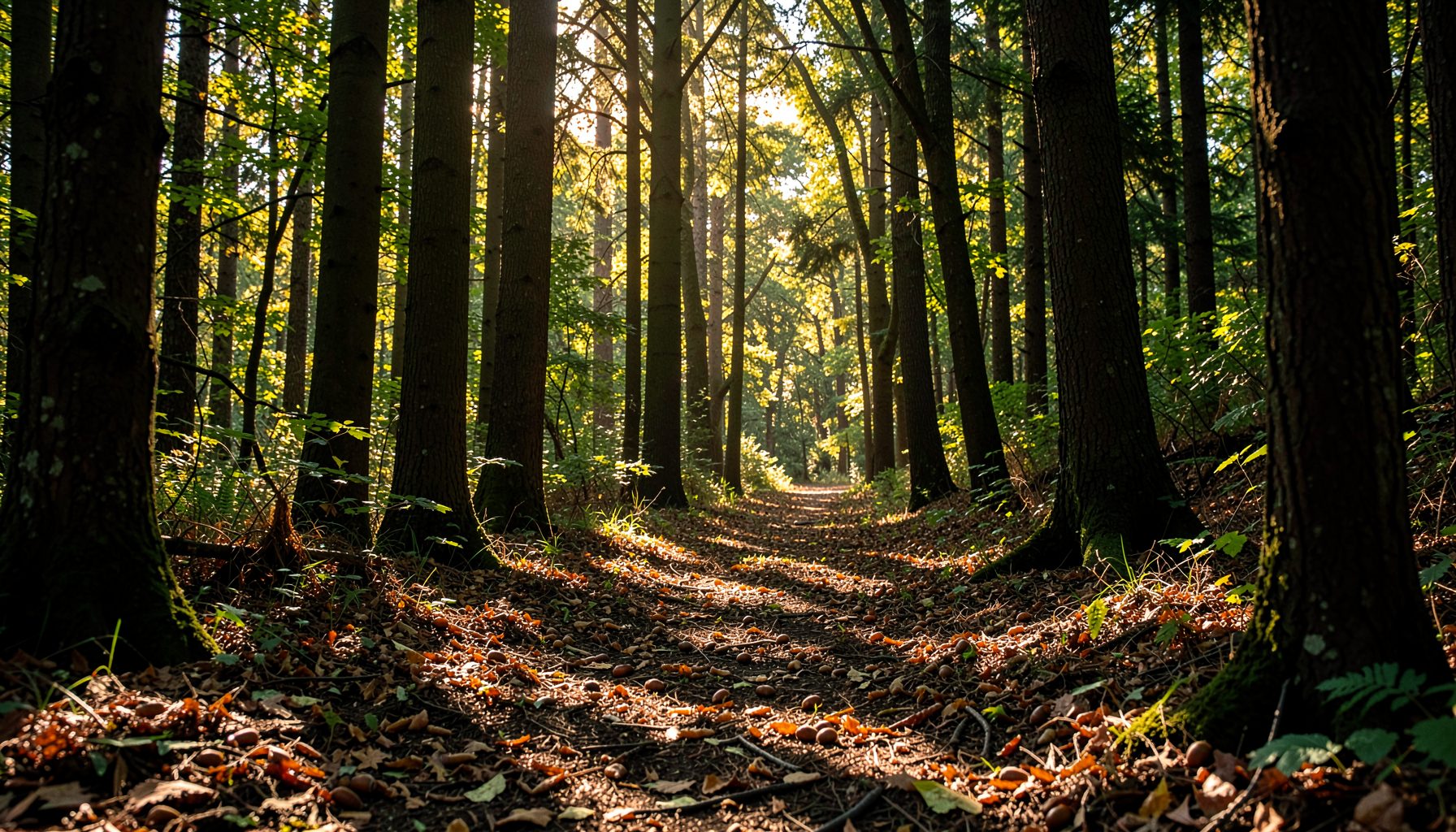
Seed collection and Native American forest traditions
The role of seed collection in supporting Native American forest traditions is both practical and deeply relational. For Indigenous nations across North America, forest seeds have supported foodways, seasonal calendars, craft, trade and the transmission of ecological knowledge. Acorns and walnuts are prominent examples, although their meanings and uses differ by community and place.
Seed collection can also support present-day forest restoration when it reconnects people with the landscapes that sustain them. Growing Native uses volunteer seed collectors in the Potomac River watershed, contributing native hardwood and shrub seeds to nurseries that produce streamside seedlings. This work offers a useful framework for conservation while recognising that Indigenous knowledge belongs to the communities that hold it.
Seeds, kinship and cultural continuity
These are living traditions held by distinct Indigenous nations. Knowledge associated with Cherokee nut harvesting, Haudenosaunee woodland stewardship or Menominee forestry cannot be blended into a single generic practice. Each community may define appropriate species, seasons, locations, protocols and teachings in its own way. Forest care is commonly grounded in close observation, responsibility towards other living beings and continuity across generations.
Collection has always required detailed attention to place. Harvesters learn when particular trees produce sound fruit, how weather affects seed quality, which parent trees have healthy histories and how seeds should be handled after gathering. Acorns may be used for food after careful processing, while walnuts can provide food, oil and materials. In some communities, the associated methods, stories and seasonal practices pass between generations through repeated activity rather than written instructions alone.
Contemporary conservation projects can support cultural continuity without claiming possession of that knowledge. Their responsibility is to listen, establish genuine relationships and follow guidance from the relevant Indigenous communities. Ceremonial knowledge is not public property, and seeds should never be treated as anonymous biological material. A community seed drive becomes ethically stronger when it supports locally defined priorities, respects restrictions and shares benefits rather than simply moving resources elsewhere.
From seed to streamside forest
Growing Native organises volunteers to collect native hardwood and shrub seeds, including acorns and walnuts. The seeds are donated to state nurseries, where they are grown into seedlings for planting along waterways. The programme connects an ordinary volunteer activity with the long process of rebuilding the forest structure that protects streams.
Trees do more than replace vegetation lost to development. Their roots stabilise streambanks and reduce erosion, while their branches shade the water and moderate changing temperatures. Leaf litter feeds aquatic insects and other stream organisms, and fallen woody material creates habitat. A young tree planted beside a creek can therefore influence water quality, soil stability and nearby biodiversity for decades.
Seed collection is one part of a wider restoration system. Seedlings need suitable soil, moisture, spacing and maintenance, while projects must consider genetic diversity and the future climate. Collecting from many healthy parent trees across suitable locations helps preserve variety. Restoration succeeds when nursery staff, Indigenous advisers, volunteers and land managers continually adjust the process using evidence from the planted site.
Restoration reaches beyond tree counts
A forest is a living network rather than a collection of individual trees. It stores carbon, cycles nutrients, filters sediments and supports the organisms on which aquatic and terrestrial food webs depend. The Potomac watershed illustrates how a change on one slope can affect a creek many kilometres away, eventually influencing the river and the communities that depend on it.
Native American forest traditions add cultural depth to this ecological picture. Care for a particular tree may be understood as an ongoing relationship rather than a one-time extraction. Seed collection can embody responsibility to future generations, especially when young people participate in identifying trees, preparing seed and learning where it will be planted.
Conservation language still matters. Describing every collector as a steward can flatten the specific responsibilities held by Indigenous Nations. Better partnerships recognise distinct authorities, protect intellectual property and leave decisions about access and use with the people concerned. The practical work of restoring forests remains valuable, particularly when it joins community knowledge, scientific monitoring and long-term care without erasing differences.
Lessons for Australian communities
The Potomac region’s oak-hickory hardwood forests do not resemble the ecosystems of most of Australia. Australian restoration commonly centres on eucalypts, wattles, tea-trees and other locally native plants, often using specialised seed collected from appropriate regional provenances. Acorns and walnuts can grow in Australian gardens, but importing or releasing them would risk introducing non-native plants and disturbing ecological balance.
Local conditions vary dramatically across Australian cities. Melbourne’s modified creek corridors, Brisbane’s subtropical gullies, Canberra’s urban woodland and Sydney Harbour’s regenerating bushland all present different challenges. They also offer established networks of Bushcare and Landcare groups, community nurseries and monitoring projects that can connect seed collection with practical habitat repair.
Australian native seedlings are available through council nurseries, specialist growers, regional plant sales and farmers’ markets. Supporting those local suppliers is usually more useful than importing unfamiliar fruit. Collection from roadsides, contaminated land or sites near invasive species can spread weeds or reduce seed quality. Permit conditions, biosecurity requirements and instructions from Traditional Custodians and land managers should guide every gathering activity.
Many Australian groups begin meetings and planting days with an acknowledgement of Traditional Custodians and Country. The transferable lesson from Indigenous forest traditions is not the copying of particular species or ceremonies. It is the need to listen to the specific knowledge held by local communities, care for future generations and treat restoration as a long relationship. Australian volunteers can apply that principle through local catchment groups and land-care networks.
Collecting and preparing seed responsibly
Responsible collection begins before fruit is gathered. Volunteers need permission from landowners, confirmation of permits and reliable species identification. Records should identify the collection date, location, parent tree and habitat condition. Collectors should avoid storm drains, heavily sprayed roadsides, sewage-contaminated sites and areas dominated by invasive plants.
Seed requires suitable drying conditions, airflow and protection from direct heat. The practical guide to a seed drying rack plans shows how volunteers can build an economical rack for community use. Separate lots must remain clearly labelled throughout drying, since mixing species or losing provenance can compromise an entire nursery batch.
Cleaning and storage determine whether viable seed reaches the nursery. A representative sample should be tested for germination, and damaged or mouldy material removed. Acorns, walnuts and smaller shrub seeds have different requirements, so instructions should be based on the species rather than a single drying period. Records of moisture, storage conditions and test results help nursery staff plan sowing and replacement needs.
Community practices that strengthen restoration
Hands-on learning gives volunteers a clearer understanding of forest ecology and improves the quality of collected seed. A seed cleaning station guide offers a practical way to organise this work at home or at a community site. Schools, families, workplaces and local groups can also use the activity to teach plant identification, seed provenance and watershed connections.
Before collection and field work
- Confirm land ownership, collection permissions, permits and any requirements set by Traditional Custodians or land managers.
- Identify each species through reliable local references and, where necessary, confirmation from a qualified botanical expert.
- Label every lot with its collection date, site, parent tree details and habitat notes.
- Avoid seeds from contaminated sites, roadsides carrying herbicide runoff, storm drains and ground dominated by invasive plants.
Once the fieldwork is complete, shared standards protect the value of every contribution. Volunteers should understand why provenance records matter, how to keep lots separate and what information the nursery needs. Clear communication also allows organisers to recognise shortages, target under-represented species and direct effort toward priority restoration areas.
From storage to nursery handoff
- Clean and dry each species using methods suited to its size, oily content and sensitivity to heat.
- Test a representative sample for germination and record the date, method and result.
- Deliver the seed with complete collection records and instructions for storage before dispatch.
- Follow the nursery’s planting guidance and share establishment observations with volunteers and land managers.
Act locally for living watersheds
For volunteers in the Potomac watershed, Growing Native volunteer opportunities provide ways to contribute seed, learn about native trees and assist with streamside restoration. Individuals, families, schools, community organisations and workplaces can all participate, while educational resources help groups build accurate knowledge before entering the field.
The same commitment can begin closer to home through a council nursery, Landcare group, Bushcare collective or catchment organisation. Choose one local programme, follow its collection protocols, record provenance carefully and continue learning about the forest and waterway being restored. Every responsibly gathered seed can become a tree that shelters wildlife, holds soil and carries a forest’s future forward.