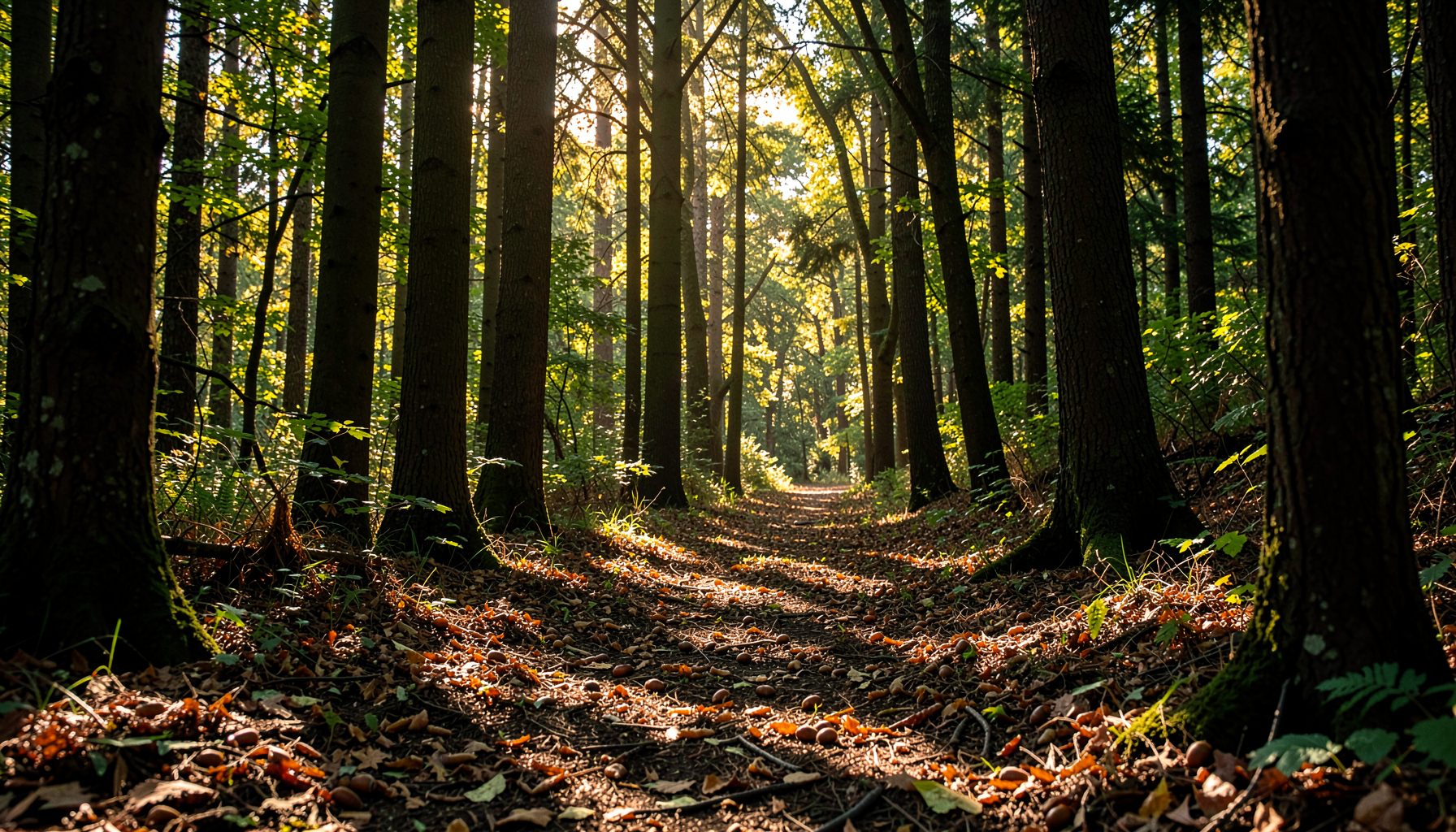
Native shrubs and stronger riverbanks
Riverbanks are living boundaries between land and flowing water. They must absorb changing water levels, withstand storms, hold soil during high flows, and provide habitat for insects, birds, and aquatic life. Native shrubs are especially valuable in this narrow zone because they combine flexible stems, dense root systems, and reliable growth with relatively modest space requirements.
A healthy shrub layer also connects larger trees, grasses, and wetland plants into a functioning riparian buffer. This layered vegetation slows runoff before it reaches the stream, filters sediment and nutrients, and creates cooler conditions along the water’s edge. When shrubs are removed, bare soil can quickly become vulnerable to rills, undercutting, and gullying.
Across the Potomac River watershed, restoring native woody plants is part of a broader effort to improve forest and stream health. Programs such as Growing Native link community members with seed collection, nursery production, and long-term reforestation, helping locally adapted plants return to places where erosion and development have weakened natural vegetation.
Why shrubs matter along waterways
Shrubs occupy an important middle layer between groundcovers and mature canopy trees. Their branches intercept rainfall, while leaves and stems reduce the speed of water moving over the soil surface. This gives rain more time to soak into the ground instead of rushing directly toward the channel and carrying loose sediment with it.
Their roots reinforce the upper and middle soil layers, where erosion often begins. A dense network of fine roots binds soil particles together, while larger woody roots create a stabilizing framework. This is particularly useful on gently sloping banks, floodplain edges, drainage channels, and places where stormwater repeatedly concentrates.
Shrubs also improve the biological health of a stream corridor. Their flowers support native bees and other pollinators, their fruits feed wildlife, and fallen leaves provide organic matter for soil organisms. Branches extending over the channel can shade the water, helping moderate temperature for fish and aquatic invertebrates.
How root systems reduce erosion
Bank stability depends on several root characteristics rather than on root depth alone. Fine roots increase soil cohesion, while spreading lateral roots help hold a broad section of bank together. A shrub with a fibrous, branching root system may protect the surface more effectively than a plant with a single deep root, especially where stormwater scours the topsoil.
Aboveground growth matters as well. Flexible stems can bend during floods and recover afterward, unlike rigid structures that may snap or be uprooted. Dense shrub stems also trap leaves, twigs, and sediment moving downstream. Over time, this captured material can build small terraces across the bank and create more favorable conditions for new plants.
Planting cannot repair every form of bank failure. If a stream is actively cutting into a steep outside bend, roots alone may not prevent collapse. Unchecked drainage, undersized culverts, livestock access, and altered channel patterns can overwhelm vegetation. In those situations, planting should be paired with watershed planning, runoff reduction, and carefully designed stream restoration.
Selecting native species for the site
The best shrub for a riverbank depends on soil moisture, flood frequency, sunlight, bank elevation, and the existing plant community. Wet, periodically flooded locations may support buttonbush, silky dogwood, elderberry, and certain willow species. Slightly higher floodplain ground may suit spicebush, blueberry, serviceberry, or native viburnums, provided the conditions match each plant’s needs.
Species diversity creates a more resilient buffer. Different shrubs root at different depths, leaf out at different times, and respond differently to drought, flooding, pests, and disease. A mixed planting is less likely to fail completely when one species encounters an unfavorable season or a new environmental stress.
Local seed sources are valuable because plants adapted to regional climate and soils are more likely to establish successfully. Growing Native’s program's approach emphasizes the connection between locally collected seeds, state nursery production, and future streamside plantings. That connection turns small acts of stewardship into a dependable supply of native trees and shrubs.
Building a layered riparian buffer
Shrubs work best as part of a multi-layered planting rather than as a single uniform row. Low herbs and grasses protect the soil surface, shrubs reinforce the bank and occupy the middle height, and larger trees provide deep shade, woody debris, and long-term structural support. The resulting buffer resembles a natural forest edge and offers more ecological functions than a simple grass strip.
Placement should reflect the bank’s natural moisture gradient. Flood-tolerant plants can be positioned closer to the channel, while species that prefer well-drained soil belong farther upslope. A varied arrangement of clusters, openings, and overlapping root zones can accommodate wildlife movement while reducing direct pathways for concentrated runoff.
Early maintenance is essential. Newly planted shrubs may need watering during dry periods, protection from deer or rodents, and removal of aggressive vines or invasive competitors. Mulch can conserve moisture, but it should remain away from stems and should never be placed where it can wash into the stream. Once plants are established, maintenance should shift toward monitoring rather than frequent disturbance.
Comparing bank protection functions
Different vegetation types contribute to riverbank resilience in complementary ways. No single layer performs every task, and a strong restoration plan uses each one where it is most effective.
| Vegetation layer | Main bank-stability role | Additional watershed benefits | Typical placement |
|---|---|---|---|
| Native grasses and sedges | Protect exposed soil and slow shallow runoff | Filter sediment and provide ground-level habitat | Bank surface, swales, and buffer edges |
| Native shrubs | Bind upper soil, trap debris, and resist moderate flow | Supply flowers, fruit, cover, and shade | Floodplain margins and middle bank |
| Mature native trees | Anchor deeper soil and reinforce long-term structure | Cool streams, store carbon, and support wildlife | Upper bank and floodplain |
| Wetland plants | Reduce flow energy in saturated areas | Remove nutrients and improve habitat | Low terraces and wet depressions |
| Leaf litter and woody debris | Cushion raindrop impact and capture sediment | Feed decomposers and aquatic food webs | Throughout the riparian corridor |
This layered approach also improves recovery after floods. Some stems may bend or break, and patches of soil may be exposed, but a diverse planting usually retains living roots in multiple soil zones. That redundancy allows the bank to repair itself more quickly than a site dominated by one ornamental species or mowed turf.
Community action supports lasting restoration
Riverbank work begins long before a plant reaches a restoration site. Collecting mature seeds, identifying native species correctly, cleaning and storing seed, and delivering it to a nursery are all practical forms of watershed conservation. Acorns, walnuts, and shrub seeds can become future plantings that strengthen stream corridors for decades.
Individuals, families, schools, community groups, and workplaces can find meaningful ways to participate through volunteer opportunities. Seed collection is often accessible to beginners when activities include guidance on identification, collection timing, and responsible harvesting. It also gives people a direct understanding of how forests regenerate.
Education strengthens the results of hands-on work. Identification guides and watershed materials help volunteers recognize which plants belong in a riparian buffer, understand why invasive species are harmful, and see how a small upstream action can affect water quality downstream. Growing Native provides restoration publications that support this kind of informed stewardship.
Practical steps for healthier riverbanks
A successful shrub restoration project should begin with observation rather than immediate planting. Examine where water flows during storms, identify areas of active erosion, note existing native regeneration, and determine whether deer, mowing, invasive plants, or drainage problems are limiting recovery.
Use these practices to support stable, biodiverse stream corridors:
- Match native shrub species to local soil moisture, sunlight, flood frequency, and available space.
- Combine shrubs with native grasses, sedges, trees, and wetland plants to create overlapping layers of protection.
- Use locally appropriate seed and nursery stock whenever possible, especially for large watershed restoration efforts.
- Protect young plants from browsing, drought, competing vines, and repeated mowing during their establishment period.
- Monitor the site after storms and across several growing seasons, replacing failed plants and correcting the causes of erosion.
A restored bank should be judged by more than its appearance immediately after planting. Look for increasing ground cover, stable soil, natural leaf accumulation, new seedlings, cooler water, and fewer signs of concentrated runoff. These gradual changes indicate that the riparian system is beginning to function as a self-supporting community.
Native shrubs may be modest in height, but their influence reaches from soil particles to the wider watershed. By holding sediment, slowing runoff, supporting wildlife, and connecting young plantings with mature forest, they help riverbanks withstand ordinary disturbances and recover from floods. Supporting seed collection and restoration through Growing Native gives communities a practical role in building that resilience, one native plant and one healthy stream edge at a time.