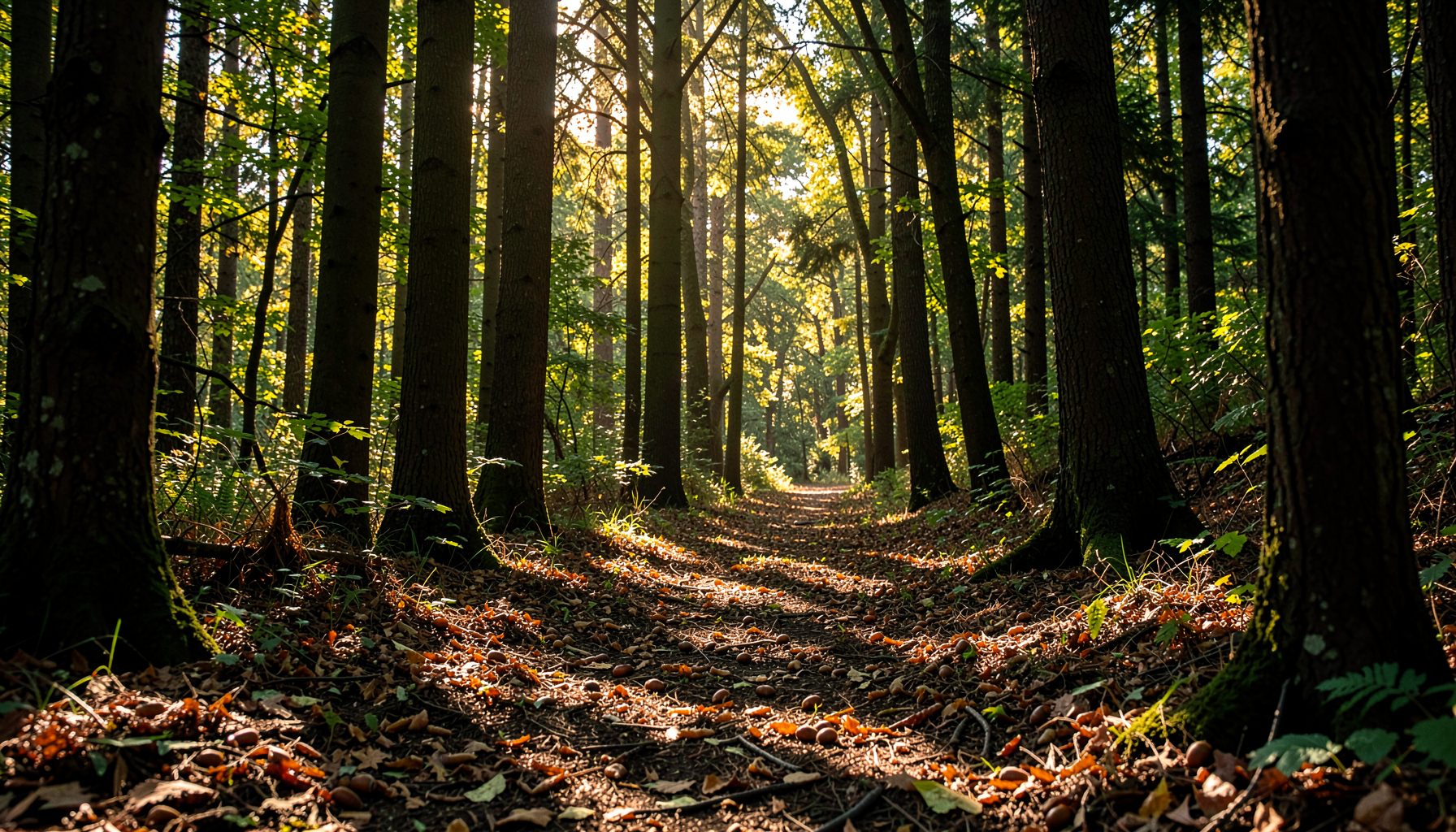
Reforesting Five Miles of Potomac Tributaries
A healthy river begins far beyond its main channel. Small creeks, runs, and branches carry rainwater through forests, farms, neighborhoods, and towns before joining the Potomac. The condition of these tributaries influences drinking water, aquatic habitat, flood resilience, and the health of the wider watershed.
Reforesting five miles of Potomac tributaries is a long-term goal built from many practical actions. It means collecting local seeds, raising native trees, restoring streamside buffers, protecting young plants, and giving each section of recovering land time to mature. The distance is easy to measure, but the ecological value reaches much farther.
Growing Native connects people with this work through hands-on conservation. A volunteer who gathers acorns or identifies a walnut tree may be contributing to a forest that will shade a stream decades from now. That connection between a small seasonal task and a lasting watershed benefit gives restoration its purpose.
Why tributaries deserve a long view
Tributaries are often narrow and overlooked, yet they form the living network that feeds the Potomac River. Their banks filter runoff, slow stormwater, hold soil in place, and provide corridors for birds, insects, amphibians, and mammals. When streamside vegetation is removed, rain can wash sediment, nutrients, and pollutants directly into the water.
Reforestation addresses these problems gradually. Native trees and shrubs stabilize banks with their roots, while fallen leaves create food and shelter for aquatic organisms. Over time, a wooded riparian buffer can lower stream temperatures, reduce erosion, and improve the conditions needed by fish and other wildlife.
Five miles represents a connected ambition rather than five isolated planting sites. Restoration is stronger when trees grow in linked stretches, allowing wildlife to move through the landscape and enabling natural processes to spread. Each restored segment becomes part of a larger ecological fabric across the Potomac watershed.
What five miles looks like on the ground
A tributary corridor changes from place to place. One section may need new trees after severe erosion, while another may have mature canopy but lack native shrubs beneath it. A third may contain invasive plants, compacted soil, or a gap between two healthy forest patches. Reaching a five-mile target requires attention to these different conditions.
The work begins with observation and planning. Volunteers and conservation partners can identify native species, note streambank problems, and determine where additional canopy or understory growth will provide the greatest benefit. Local knowledge matters because the right species and restoration method depend on soil, moisture, sunlight, wildlife pressure, and land use.
The goal is therefore measured in more than planted acreage. A successful corridor includes living trees, stable banks, functioning habitat, and communities that understand why the stream matters. It also includes a maintenance plan, because young seedlings need protection while their roots and stems become established.
From seed collection to streamside seedling
Native seed collection is the first link in a chain that may take years to complete. Acorns, walnuts, and other seeds are gathered during their natural seasons, sorted, stored, and delivered to state nurseries. There they can be grown into seedlings suited to the region’s climate and ecological conditions.
This approach preserves genetic connections to local forests and turns seasonal abundance into future restoration stock. A single volunteer outing may yield seeds from several native hardwood or shrub species. Those seeds can eventually become oaks, hickories, maples, dogwoods, willows, or other plants that support watershed health in different ways.
People who want to take part can find current opportunities through Growing Native, where individuals, families, schools, community groups, and workplaces can connect with conservation activities. Participation does not require advanced botanical training. Learning to recognize a few local trees, collect responsibly, and follow handling instructions is a meaningful entry point.
The process also teaches patience. Between collection and planting, seeds may require careful storage, nursery cultivation, site preparation, and transportation. The time between a volunteer’s action and a visible forest can be long, yet every stage supports the next.
The benefits grow together
Streamside reforestation produces several forms of public and ecological value at once. Trees intercept rainfall before it reaches the soil, their roots reinforce streambanks, and their canopy shades the water. Shrubs and groundcover fill lower layers of habitat, making the corridor more structurally diverse.
The benefits become clearer when restoration outcomes are viewed together:
| Restoration outcome | How native vegetation helps | Long-term watershed value |
|---|---|---|
| Cleaner water | Roots and leaf litter slow runoff and capture sediment | Reduced pollutant and nutrient delivery |
| Stable streambanks | Deep and fibrous roots hold soil in place | Less erosion and fewer sediment loads |
| Cooler water | Canopy shade limits excessive warming | Better conditions for aquatic life |
| Wildlife habitat | Trees, shrubs, and dead wood create shelter and food | Stronger habitat connectivity |
| Flood resilience | Vegetated banks absorb and slow high flows | Lower damage during intense storms |
| Community stewardship | Volunteer work builds local knowledge | Continued care for restored sites |
These outcomes reinforce one another. Cleaner water supports healthier aquatic communities, while stable banks allow plants to mature. A stronger plant community provides better habitat and greater protection during storms. Restoration succeeds when these relationships are allowed to develop together rather than being reduced to a single planting-day statistic.
Reforestation also supports climate adaptation. A diverse native corridor can withstand seasonal stress more effectively than a thin strip of uniform vegetation. As trees mature, they store carbon, improve local shade, and help communities prepare for heavier rainfall and warmer conditions.
A shared plan for lasting stewardship
A five-mile restoration effort depends on repeated participation. Schools can use seed collection to connect biology lessons with local geography. Families can learn tree identification during autumn walks. Workplaces and civic organizations can contribute people, transportation, equipment, or funding. Each group brings a different kind of capacity to the watershed.
Education gives these activities depth. The watershed learning resources can help participants understand forest ecology, native species, stream function, and the relationship between land management and water quality. When people know what they are seeing, volunteer work becomes an ongoing practice of observation rather than a one-time event.
Consistent stewardship can focus on several priorities:
- Collect seeds only from healthy native trees and follow seasonal guidance.
- Record species, locations, and collection dates when requested by program coordinators.
- Protect planted seedlings from browsing, mowing, invasive plants, and accidental damage.
- Encourage schools, families, and community groups to return for recurring activities.
- Share local observations about erosion, flooding, invasive species, and stream conditions.
Coordination is especially important across property boundaries. Water does not stop at a fence line, and restoration benefits can be lost when a healthy buffer ends abruptly beside an unmanaged bank. Partnerships among landowners, municipalities, nurseries, educators, and volunteers help create continuity along the full tributary corridor.
Measuring progress across decades
The first signs of progress may be modest: a seedling surviving its first summer, a stabilized patch of soil, or a new volunteer group learning to identify native trees. These indicators matter because early survival determines whether a planting develops into a functioning forest community.
Monitoring should track both biological and social measures. Teams can record seedling survival, canopy growth, invasive plant coverage, bank condition, water temperature, and signs of wildlife use. They can also track volunteer participation, school involvement, repeat visits, and the number of sites receiving follow-up care.
A five-mile objective becomes credible when progress is visible in stages. Early years may emphasize seed collection and planting. The middle years may focus on maintenance, gap filling, and invasive species control. Later decades should show increasingly continuous canopy, stronger habitat connections, and more self-sustaining regeneration.
Long-term measurement also protects the value of volunteer effort. When communities can see how collected seeds became nursery stock and how nursery stock became streamside forest, the restoration story remains tangible. Records turn scattered actions into evidence of a shared achievement.
Help extend the forested corridor
Reaching five miles of restored Potomac tributaries will require many contributions made at the right time: a handful of acorns, a classroom lesson, a workday beside a creek, or a return visit to check young trees. The goal is ambitious because healthy forests take time, yet the pathway is practical and open to people with different skills and schedules.
Individuals and organizations can support the effort by joining a seed collection event, organizing an educational activity, helping care for planted sites, or sharing the importance of native streamside forests with neighbors. Every contribution strengthens the connection between local action and watershed recovery.
Visit Growing Native to find ways to participate in restoring the forests and waterways of the Potomac watershed. With sustained community involvement, five miles can become a visible beginning: a connected corridor of native trees, cleaner streams, stronger habitat, and stewardship carried forward for generations.