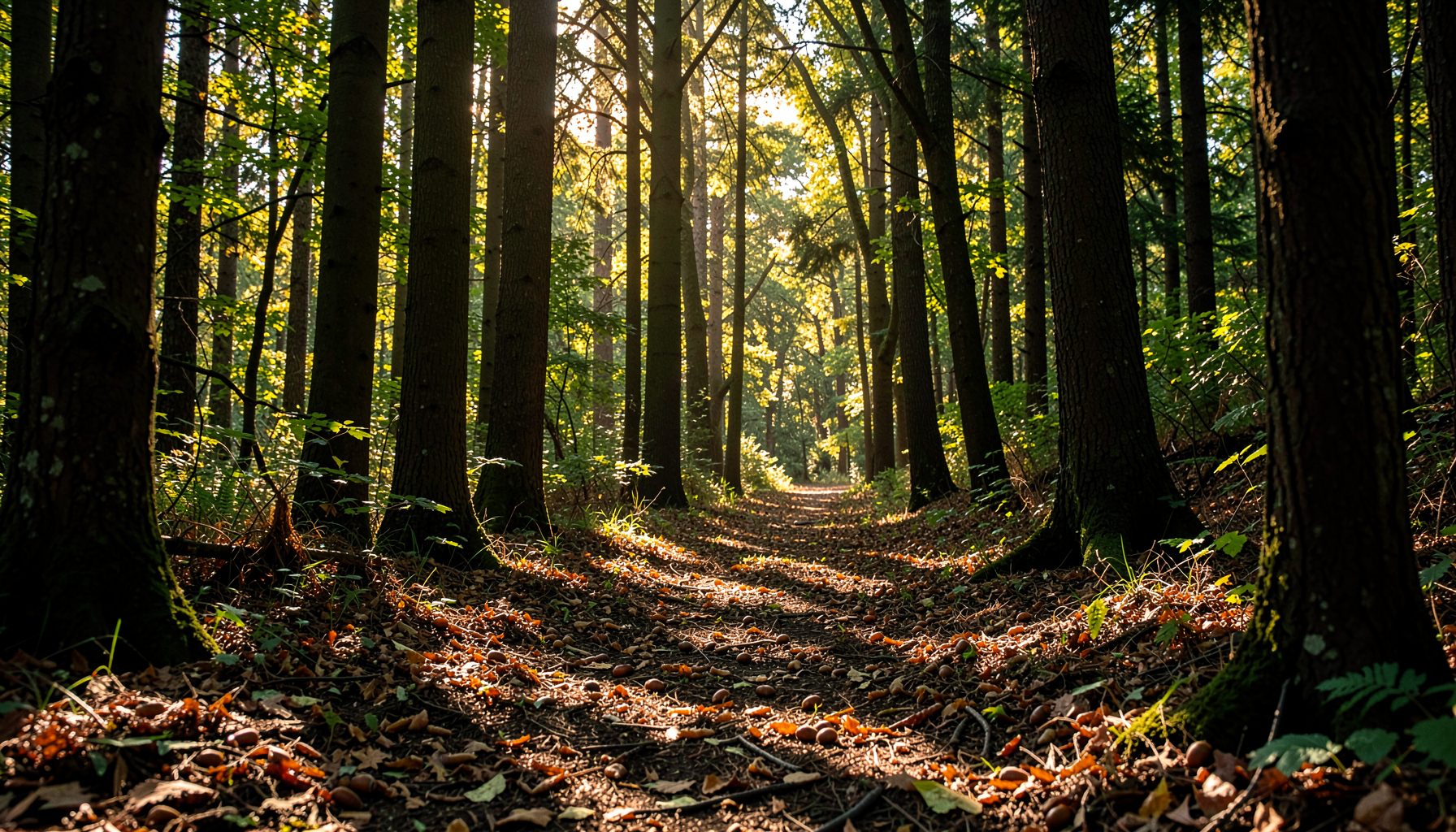
Collecting Seeds From Clay-Loving Trees For Watershed Restoration
Volunteers who turn up at dawn with buckets and paper bags are doing more than gathering the future of a forest. They are quietly decoding which species can survive where roads have been cut, where topsoil has been stripped, and where rain turns the ground into something resembling pottery clay. Across both hemispheres, restorationists now recognise that the trees most likely to anchor a streambank, shelter native fauna, and outcompete weeds are often those whose parent stock grew in heavy, sticky ground. Choosing seed from those trees is a small step with an outsized effect on whether a planting lasts five years or fifty.
This piece explores why clay-adapted parent trees produce hardier seedlings, which species suit particular soil profiles, and how collectors can plan their season around seed ripening, weather windows, and dormancy. It also covers the practical side of collection: when to pick, how to clean, how to store, and how to get seeds into the hands of growers who can raise them into healthy nursery stock. The discussion draws on Australian experience because heavy clay dominates huge tracts of the country, from the basalt plains west of Melbourne to the black soils of the Darling Downs.
Programs such as Growing Native show what is possible when everyday people treat seed collection as a form of stewardship. By gathering acorns, walnuts, and other hardwood seeds from locally adapted trees and donating them to state nurseries, volunteers help build the streamside forests of tomorrow. The principles below translate directly, whether you are coordinating a school group in Adelaide or planting out a farm dam in rural New South Wales.
Why clay matters for healthy forests
Clay soils are dense, slow-draining, and prone to cracking when dry. For a young seedling, that creates two stressors at once: roots sitting in saturated airless pockets during wet seasons, and roots tearing as the soil shrinks in summer. Trees that evolved in those conditions develop finer, more fibrous root systems, or produce deep taproots that punch through compacted layers. Their seeds carry that resilience, often with thicker seed coats that resist rot and longer dormancies that wait for the right moisture pulse.
Seeds collected from a sandy ridge or a loamy riverflat rarely perform well when planted into a heavy clay bank. They may germinate, hold on for a season, then collapse during the first extended dry spell or flood event. For projects along eroding streams, where the goal is to lock the bank in place for decades, this mismatch is a quiet but expensive failure. Matching the seed to the soil from the start is far cheaper than replacing dead seedlings.
Native trees that flourish in heavy clay
In Australia, several widely planted natives handle clay with ease once established. River red gum tolerates periodic inundation along inland watercourses, while yellow box and grey box anchor the grassy woodland clays of Victoria and southern New South Wales. Casuarina cunninghamiana thrives beside rivers where fine sediment smothers less tolerant species, and several Melaleuca species cope with the damp, anaerobic clays of coastal floodplains. Acacias are another reliable choice, particularly on the heavier duplex soils common around Perth's outer suburbs.
For collectors, the lesson is to look around. If a mature tree on a neighbouring property is thriving in heavy clay with no irrigation, its seed carries the genetic memory of that adaptation. Local provenance is especially important in Australia, where climate gradients and soil types shift sharply across short distances. A Eucalyptus camaldulensis grown from seed collected near Albury performs very differently from one sourced from the dryland clays near Deniliquin.
Species commonly targeted for clay-rich streambanks:
- Eucalyptus camaldulensis (River Red Gum)
- Eucalyptus melliodora (Yellow Box)
- Casuarina cunninghamiana (River Sheoak)
- Melaleuca quinquenervia (Broad-leaved Paperbark)
- Acacia mearnsii (Black Wattle)
Timing and technique for seed collection
Timing is everything. Most Australian hardwoods ripen their seed between late spring and early autumn, though this varies by species and latitude. River red gum sheds seed through summer, while yellow box can hold capsules on the tree well into the cooler months. Collectors should monitor target trees weekly as the season approaches, watching for colour changes, capsule splitting, or the first signs of seed fall. Picking too early means empty or underdeveloped seed; waiting too long means local parrots and cockatoos will beat you to it.
Technique matters too. Clean paper bags or breathable calico sacks beat plastic for transport, because trapped moisture encourages mould. For acorns and similar nuts, spread them at home on a single layer of newspaper and check daily for weevil damage. Any nut showing small exit holes should be culled, as the larva inside has already hollowed out the kernel. Healthy nuts feel heavy for their size and show no signs of wrinkling.
Practical steps for a successful seed run:
- Scout target trees several weeks before expected ripening
- Carry a notebook to record GPS coordinates, soil type, and surrounding species
- Pick on a dry day after dew has evaporated
- Label every bag with date, species, and site description
- Avoid trees showing signs of disease, dieback, or heavy mistletoe infestation
Australian community programs and nurseries
Australia has a deep bench of community-driven revegetation work. Landcare and Bushcare groups across the country have been collecting seed and planting for decades, often in partnership with local councils. Greening Australia runs large-scale native seed banking and has pioneered direct seeding techniques on farms and roadsides. State agencies such as the Victorian Department of Energy, Environment and Climate Action maintain seed banks and can sometimes supply small quantities of locally provenanced seed to community projects.
Sydney's Hawkesbury-Nepean region is a useful case study. Much of the soil along its tributaries is heavy alluvial clay, and Bushcare volunteers there have spent years collecting river sheoak and paperbark seed to stabilise banks after flood events. In South Australia, the Adelaide Hills face a different challenge: clay subsoils left exposed after bushfires. Local schools have helped collect acorns from surviving old-growth oaks to replant creek lines that feed into the Murray-Darling system. Programs like Growing Native operate on a similar model, showing how citizen science can scale up when the goal is watershed repair.
Linking clay-tolerant species to cleaner waterways
The reason clay-friendly trees matter for water quality is rooted in physics. Their dense, fibrous roots bind fine sediment, slowing the runoff that clouds streams after storms. Their leaf litter feeds aquatic invertebrates, which in turn feed fish and platypus. Canopies shade the water, lowering temperatures that can otherwise stress native fauna. None of this works if the trees die within a few seasons, which is why starting with the right seed source is foundational.
Invasive willows, ash, and ornamental pears often colonise clay banks precisely because the natives were missing. The damage they cause to streamside restoration is documented in resources like this overview of invasive threats. Replacing them requires physical removal plus a steady pipeline of locally adapted seedlings, which is where collector programs earn their keep. Each bag of seed handed to a nursery is a small insurance policy against the next flood or drought.
Storing and propagating seeds for nursery success
Once seed arrives at the home or nursery bench, the next decision is whether to sow fresh or bank it for later. Many eucalypts and acacias store well at room temperature in breathable containers, kept dry and dark. Hard-coated seeds often germinate better after a hot water treatment or light scarification, mimicking the passage through a fire or an animal gut. Without that step, germination rates can be frustratingly low.
Mycorrhizal associations also play a quiet but powerful role in seedling survival. A useful primer explains how soil fungi support seedlings. Some nurseries now inoculate propagation trays with native fungal slurries collected from beneath healthy parent trees, lifting survival rates significantly on heavy clay sites. Home growers can replicate this on a smaller scale by adding a spadeful of litter from beneath a thriving specimen tree to their potting mix.
Legislation shaping seed collection and planting
Collecting native seed in Australia is not unregulated. The Environment Protection and Biodiversity Conservation Act 1999 protects listed threatened species, and several states have additional rules. In Victoria, commercial collection from public land generally requires a permit, while small personal quantities for restoration are usually tolerated. New South Wales operates the Saving our Species program and channels community seed through its own network. Western Australia, with its astonishing flora diversity, takes a firm line on removing any plant material from Crown land without authorisation.
For community projects, the safest path is to collect from your own property, with landowner permission, or in coordination with an established group that already holds the right permits. Bushcare coordinators and Landcare facilitators can usually point newcomers in the right direction. Funding is often available through local council environment grants, Catchment Management Authorities, or the federal National Landcare Program, particularly where the project targets a priority waterway.
A healthy streamside forest starts long before a seedling touches soil. It begins with someone noticing a healthy old tree on a clay bank, returning at the right moment with a paper bag, and handing the seed to a grower who understands what that little capsule represents. If you live anywhere with heavy clay, look out your window. The parent tree for your next planting project may already be standing there. Reach out to Growing Native to learn how you can join a collection day, donate seed, or host a workshop in your neighbourhood.