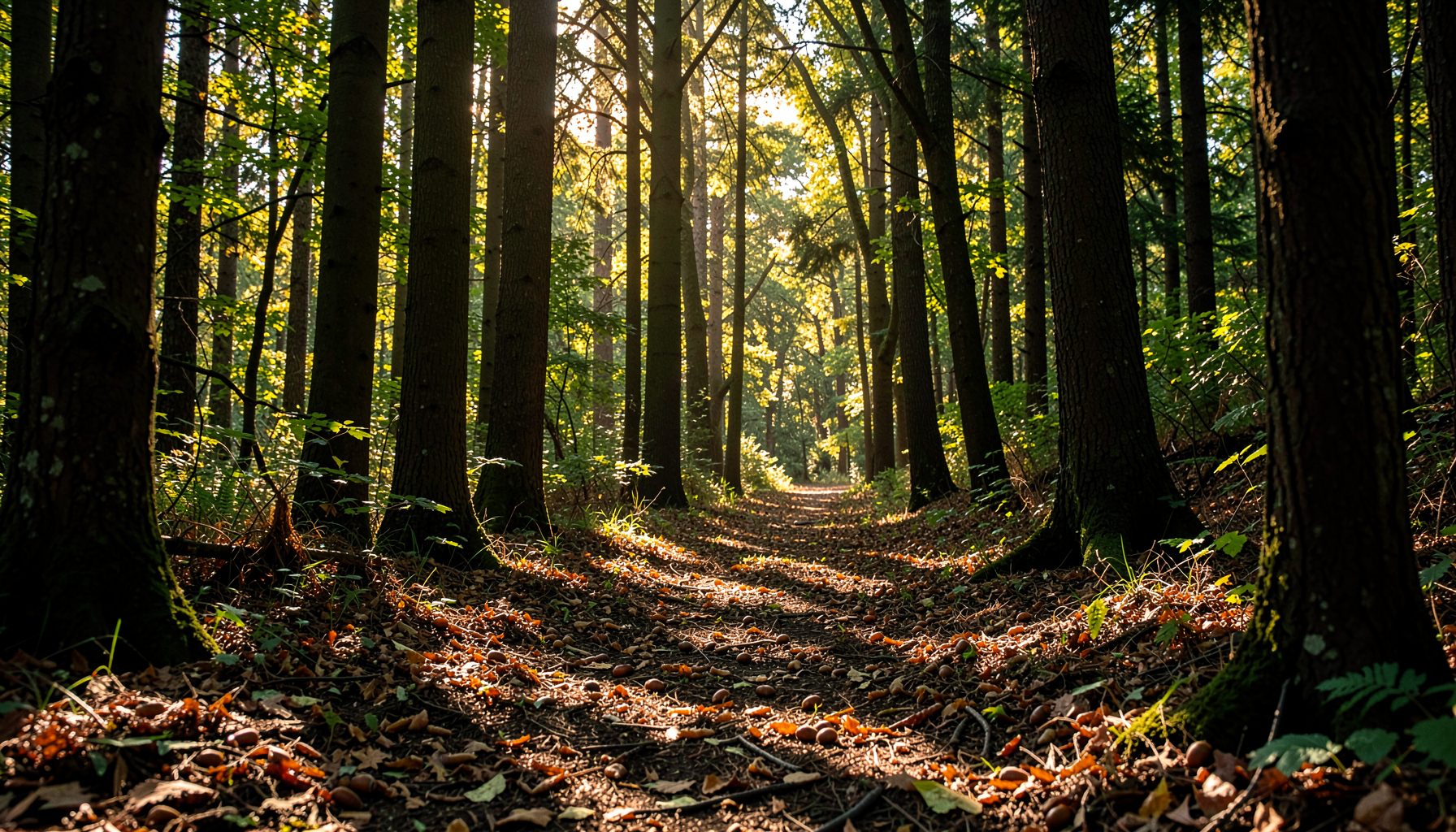
Native trees that strengthen pollinator habitat along waterways
Riparian forests are living transition zones between land and water. Their trees shade streams, hold soil in place, filter runoff, and create habitat for birds, mammals, insects, and aquatic organisms. For pollinators, these corridors can provide an especially valuable sequence of flowers, nesting sites, shelter, and fruit within a relatively narrow strip of land.
Choosing native trees for a streamside planting requires more than selecting species that grow quickly. The strongest plantings reflect local soil, moisture, flood frequency, sunlight, and the timing of bloom. A diverse mix of canopy trees, small trees, shrubs, and ground-layer plants can support bees, butterflies, moths, beetles, and other beneficial insects across the growing season.
In the Potomac River watershed, seed collection and restoration efforts help connect healthy forests with cleaner water. Growing Native engages volunteers in gathering acorns, walnuts, and other native hardwood and shrub seeds so they can be raised by state nurseries and returned to the landscape as streamside seedlings.
Why riparian forests matter to pollinators
Streamside trees influence pollinator habitat from the treetops to the soil. Their flowers provide nectar and pollen, while bark crevices, dead branches, leaf litter, and loose soil offer places for insects to nest or spend the winter. A mature riparian corridor may support species that need both woodland cover and nearby open flowers during different life stages.
Trees also improve conditions for plants growing beneath them. By moderating summer temperatures and retaining moisture, a forested buffer can help spring ephemerals, native sedges, goldenrods, asters, and other flowering plants persist through dry periods. These smaller plants often extend the flowering season after trees have finished blooming.
Water quality is closely connected to this habitat value. Tree roots reduce bank erosion and absorb excess nutrients, while shade keeps streams cooler for aquatic life. Pollinators benefit from the same stable, diverse ecosystem that protects the watershed. Anyone planning a restoration project can use educational resources to build stronger knowledge of tree identification, forest ecology, and watershed health.
Early-blooming trees fill a critical seasonal gap
Many native trees flower before the forest canopy fully develops. This timing makes their blossoms easier for bees and other insects to reach, while offering food at a point when few other plants are flowering. Red maple, silver maple, and American elm can provide early-season pollen and nectar in wet or periodically flooded areas, though each should be matched carefully to the site.
Serviceberry is a valuable small tree for stream margins, woodland edges, and higher banks. Its white spring flowers attract native bees, and its summer fruit feeds birds and mammals. Eastern redbud is another strong choice for sunny or partly shaded edges, with pink flowers appearing on bare branches in early spring. Because it remains relatively small, redbud works well beneath taller canopy trees.
Pawpaw contributes a different kind of ecological value. Its dark maroon flowers attract beetles and flies rather than relying primarily on bees, and its dense foliage provides cover during summer. Pawpaw often performs best in moist, rich soil with some protection from intense afternoon sun. Planting several individuals can improve fruit production and create a more substantial patch.
Tree choices for different riparian conditions
No single species is ideal for every streamside location. The wettest floodplain, the sloping upper bank, and the sunny edge each call for a different combination of native trees. The following comparison highlights useful characteristics, but local provenance and nursery availability should guide final selection.
| Native tree | Bloom period | Pollinator value | Suitable riparian setting |
|---|---|---|---|
| Red maple | Late winter to early spring | Early pollen and nectar for emerging insects | Moist floodplains and lower banks |
| Serviceberry | Early to mid-spring | Bees use flowers; fruit supports wildlife | Partly shaded banks and woodland edges |
| Eastern redbud | Early spring | Abundant flowers visited by bees | Sunny edges and well-drained upper banks |
| Black gum | Late spring | Nectar for bees and other flower visitors | Moist, acidic soils and floodplain margins |
| Tulip poplar | Late spring to early summer | Large nectar-rich flowers for bees and butterflies | Deep, well-drained soils above regular flooding |
| American basswood | Early to mid-summer | Highly attractive nectar source for bees | Moist, fertile banks with adequate space |
| Pawpaw | Spring | Flowers attract beetles and flies; foliage hosts zebra swallowtail larvae | Sheltered, moist woodland margins |
| Flowering dogwood | Mid-spring | Flowers attract bees and other insects; fruit supports wildlife | Well-drained banks and forest edges |
Black gum, also called black tupelo, deserves attention where soils are moist but not constantly saturated. Its spring flowers are modest in appearance but useful to insects, and the tree provides excellent fall color and wildlife value. It is a long-lived canopy species that can add structural diversity to a restoration project.
Tulip poplar and American basswood are particularly valuable where space allows larger trees to mature. Tulip poplar flowers are high in nectar and often visited by bees and butterflies. Basswood blooms in early summer, helping bridge the period between spring-flowering trees and later herbaceous plants. Both species should be planted away from narrow stream channels, utility lines, and locations that cannot accommodate their eventual size.
Match species to water, soil, and sunlight
Flood tolerance is one of the most important selection factors in a riparian planting. Lower floodplain areas may remain saturated for long periods, while upper banks may experience only occasional flooding. Red maple and certain willows can handle wetter conditions, but a species that tolerates temporary inundation may struggle in permanently waterlogged soil or compacted construction fill.
Drainage, soil texture, and pH also affect establishment. Serviceberry and flowering dogwood generally prefer well-drained soil, making them better choices for elevated banks than for depressions that collect standing water. Pawpaw favors moisture and organic matter, while black gum can perform well in acidic soils. Before planting, observe where water moves during storms and identify areas that stay wet after the stream recedes.
Sunlight changes over time as trees grow. A site that appears open today may become shaded within a decade. Use sun-loving species such as redbud and tulip poplar along broad edges, and reserve shade-tolerant choices for areas beneath an existing canopy. Maintaining several layers of vegetation usually produces more pollinator habitat than filling an entire corridor with one fast-growing tree.
Build a flowering sequence and layered habitat
A pollinator-supportive riparian forest should offer flowers from late winter through summer. Early maples, redbud, and serviceberry can start the season, followed by black gum, dogwood, tulip poplar, and pawpaw. Basswood extends nectar availability into early summer. Native shrubs and herbaceous plants then carry the sequence forward with species such as buttonbush, blueberry, elderberry, goldenrod, mountain mint, and aster.
Flowering trees are most effective when combined with nesting and overwintering habitat. Leave some standing dead wood where safety permits, retain fallen branches in stable locations, and avoid removing every patch of leaf litter. Many native bees nest in soil, hollow stems, or decaying wood. Excessive mulching, frequent mowing, and intensive cleanup can remove these essential habitats even when the tree canopy looks healthy.
Dogwood also illustrates how a tree can support a wider food web. Its spring flowers draw insects, while its later fruit feeds birds and mammals that move seeds through the watershed. For a closer look at seasonal identification and wildlife value, consult this dogwood berry guide. Selecting trees for several kinds of ecological benefit makes a restoration planting more resilient.
Practical choices for a successful planting
Species diversity should be balanced with site realism. Planting too many kinds in a small area can make maintenance complicated, while relying on a single species leaves the corridor vulnerable to pests, disease, and changing weather. A practical design may use two or three canopy species, several small trees, and a broad mix of native shrubs and flowering perennials.
- Prioritize locally native species suited to the watershed and the specific moisture regime.
- Include trees with early, midseason, and early-summer bloom periods.
- Combine canopy trees with small trees, shrubs, vines, and flowering ground-layer plants.
- Protect young seedlings from deer, mowing, invasive vines, and competing turf.
- Retain leaf litter, fallen wood, and safe snags to support nesting and overwintering insects.
Planting density should leave enough room for healthy growth while creating a connected corridor. Clusters of the same species can improve pollination and make flowers easier for insects to locate, while interspersing different species reduces the risk of a single disturbance affecting the entire site. Along narrow banks, prioritize root stability and a continuous buffer over ornamental spacing.
Early maintenance determines whether a promising planting becomes a functioning forest. Water seedlings during extended dry weather, replace damaged tree guards, control invasive plants, and inspect the site after floods. Monitoring bloom times, wildlife visits, survival rates, and bank condition can reveal which species are best suited to future projects.
Grow the next generation of watershed forests
Native tree restoration begins long before a seedling reaches a streambank. Collecting mature acorns, walnuts, berries, and other seeds at the right time helps nurseries produce trees adapted to regional conditions. Volunteers can contribute through individual outings, family activities, school programs, community events, and workplace service days.
Growing Native’s seed-collection work connects everyday stewardship with long-term habitat recovery. A handful of properly identified seeds can eventually become trees that shade a stream, stabilize a bank, feed pollinators, and provide fruit for wildlife. Participants also gain practical skills in recognizing native species and understanding how forests function as part of a watershed.
If you are planning a restoration day, organizing a school activity, or looking for a meaningful way to support the Potomac River watershed, take part in native seed collection and education through Growing Native. Your time can help turn seasonal observations into enduring riparian forests where pollinators, clean water, and healthy communities can thrive.