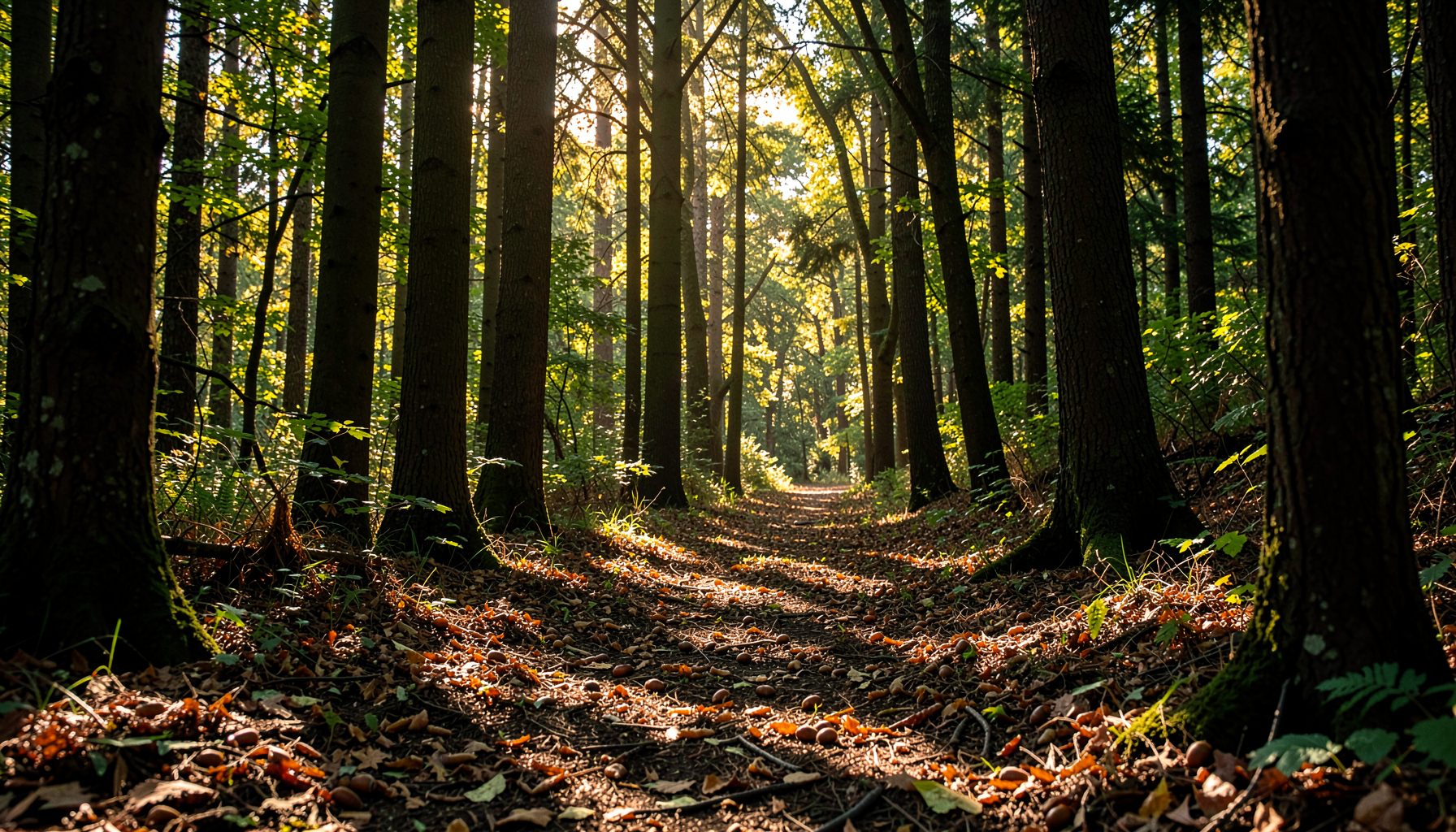
Native Groundcovers for Healthy Streamside Forests
A healthy streamside forest is more than a canopy of tall trees. Its understory also needs a living layer of leaves, stems, and roots that covers bare soil, slows rainfall, and gives wildlife shelter. Native groundcovers are especially valuable because they are adapted to local soils, seasonal weather, and the insects that support the wider food web.
Understory plants can stabilize stream banks, reduce erosion, filter runoff, and help woodland soils hold moisture during dry periods. In the Potomac River watershed, the best selections vary from damp floodplain edges to shaded slopes above a creek. Choosing plants according to those conditions creates a stronger and more durable planting.
The phrase native groundcovers for understory streamside areas includes many plant forms: low-growing perennials, spreading ferns, sedges, woodland wildflowers, and small shrubs. A successful design usually combines several layers rather than relying on a single attractive species.
Why Streamside Groundcovers Matter
Bare soil beside a creek is vulnerable to raindrop impact and fast-moving runoff. During storms, sediment can wash from exposed banks into the channel, clouding the water and covering aquatic habitat. A dense ground layer intercepts rainfall before it reaches the soil and creates a network of roots that holds the surface together.
Groundcovers also improve the forest floor. Fallen leaves collect among their stems, decomposing into organic matter that supports fungi, insects, and soil organisms. This natural mulch can moderate temperature and help the ground absorb water instead of sending it directly downhill.
Native plants provide ecological benefits that many ornamental groundcovers cannot match. Their flowers, fruits, and foliage support native pollinators, caterpillars, birds, and small mammals. Even plants that are not showy for much of the year can contribute valuable habitat in a streamside buffer.
What Good Understory Plants Need
Light is the first condition to assess. A site beneath mature tulip poplars or sycamores may receive bright spring sun but deep summer shade. Deciduous woodland plants often take advantage of that seasonal light, flowering before the canopy closes. Other species, such as Christmas fern, are well suited to consistent shade.
Moisture can change dramatically over a few feet. The lowest portion of a floodplain may be wet after ordinary rain, while a slightly raised terrace may drain quickly. Plants placed in saturated soil need tolerance for periodic flooding, but plants on a sloped bank need roots that can cope with alternating wet and dry periods.
Soil disturbance matters as well. Construction, mowing, invasive vines, deer browsing, and compacted footpaths can prevent a groundcover from becoming established. Before planting, identify drainage patterns, remove invasive growth carefully, and preserve existing native regeneration wherever possible.
Native Species Worth Planting
Wild ginger is a strong choice for rich, moist woodland soil. Its broad, heart-shaped leaves form a low carpet, and its unusual flowers appear close to the ground in spring. It performs best in shade and spreads steadily when given adequate moisture and organic matter.
Christmas fern offers year-round structure on shaded banks and rocky stream margins. Its evergreen fronds help protect the soil through winter, when deciduous plants have died back. Foamflower creates attractive colonies in cool, humus-rich sites, while golden ragwort brings yellow spring flowers and can tolerate moist woodland conditions.
Native sedges deserve special attention because they resemble grasses but are often better adapted to woodland floors and wet margins. Pennsylvania sedge works well in dry to moderately moist shade, while tussock sedge suits wetter ground. Sedges can create a fine-textured, root-dense layer between larger perennials and shrubs.
| Native groundcover | Best site conditions | Seasonal value | Streamside role |
|---|---|---|---|
| Wild ginger | Moist, rich soil and shade | Broad foliage from spring through fall | Covers soil and supports woodland habitat |
| Christmas fern | Shade, slopes, rocky or well-drained banks | Evergreen fronds | Protects soil through winter |
| Foamflower | Cool, moist, humus-rich woodland | Spring flowers and attractive leaves | Forms colonies beneath trees |
| Golden ragwort | Moist shade to partial shade | Bright spring bloom | Adds pollinator resources and ground cover |
| Pennsylvania sedge | Dry to moderately moist woodland | Fine foliage and dependable texture | Useful beneath trees on upper banks |
| Tussock sedge | Wet margins and seasonally saturated soil | Clumping form through much of the year | Helps hold wet soils |
| Virginia bluebells | Moist floodplain soil and filtered light | Early spring flowers | Supports seasonal woodland diversity |
Virginia bluebells are particularly effective in moist floodplain forests where spring light reaches the ground. Their foliage disappears after flowering, so pair them with later-emerging plants such as ferns or sedges to maintain cover. The result is a layered planting that changes through the growing season without leaving large areas bare.
Match Plants To Site Conditions
A planting map can divide the stream corridor into simple zones. The wettest strip near the ordinary high-water area may suit tussock sedge, certain rushes, and other moisture-tolerant plants. The middle buffer can include wild ginger, foamflower, golden ragwort, and ferns. Drier upper banks may favor Pennsylvania sedge, woodland phlox, and other plants adapted to well-drained shade.
Existing trees should guide the design. Planting beneath established roots can damage trees if the soil is heavily disturbed, so use small plugs or divisions and dig carefully. Leave room around trunks, avoid piling soil against bark, and retain fallen logs when they do not obstruct safe access. Woody debris provides shelter for insects and helps the forest floor retain moisture.
Deer pressure may determine which species survive. In areas with heavy browsing, Christmas fern, sedges, and some robust native perennials may be more reliable than highly palatable wildflowers. No plant is completely deer-proof, and temporary fencing or repellents may be necessary while new plants develop.
Establish and Maintain Living Cover
Planting in early spring or fall usually gives roots time to develop before hot, dry weather. Water new installations during the first growing season, especially when rainfall is irregular. A two- to three-inch layer of leaf mulch can conserve moisture, but keep mulch away from tree trunks and avoid burying small plants.
Spacing should allow plants to knit together without forcing them into immediate competition. Plugs planted in loose drifts often look sparse at first but fill in naturally. A mixture of three or more compatible species is generally more resilient than a single-species carpet, particularly where water levels and light conditions fluctuate.
Weed control is the main maintenance task during establishment. Remove invasive garlic mustard, Japanese stiltgrass, English ivy, bush honeysuckle, and other aggressive plants before they set seed. Pulling or cutting is preferable to broad herbicide use near water, though experienced professionals may use carefully targeted treatments when appropriate.
Mowing should stop within the planted buffer except where a maintained path is needed. If access is essential, define it clearly so repeated foot traffic does not compact the soil. Over time, fallen leaves should remain in place as natural mulch, and dead stems can be left through winter to provide cover and food for wildlife.
Choose Plants With Long-Term Stewardship In Mind
A streamside planting succeeds when it fits the larger watershed rather than functioning as an isolated garden. Collect information about local soil, light, flooding, deer, and invasive species before ordering plants. Use nursery-propagated native stock from reputable sources, and never remove plants from wild forests or stream banks.
Community involvement can make restoration more practical and educational. Families, schools, workplaces, and conservation groups can learn to identify native trees, gather locally appropriate seed where permitted, and understand how those seedlings eventually support forest recovery. The educational resources and volunteer opportunities offered through Growing Native connect individual actions with broader restoration across the Potomac watershed.
Use these priorities when selecting and installing understory cover:
- Preserve naturally occurring native plants before adding new species.
- Match each plant to its moisture, drainage, light, and browsing conditions.
- Combine evergreen ferns, sedges, seasonal wildflowers, and spreading perennials.
- Keep invasive species and routine mowing out of the restoration zone.
- Monitor new plantings through several seasons and replace failures thoughtfully.
A small planting can also become part of a larger conservation effort. Healthy groundcover protects the soil around young trees, improves habitat between forest patches, and helps rainfall move through the landscape more slowly. Those benefits become more significant when many landowners, schools, and community groups restore connected sections of streamside forest.
For help finding ways to participate in watershed restoration, use the Growing Native contact page to connect with the program. Whether the next step is volunteering, learning plant identification, or improving a creekside property, every well-chosen native plant adds living protection to the forest floor and the water downstream.