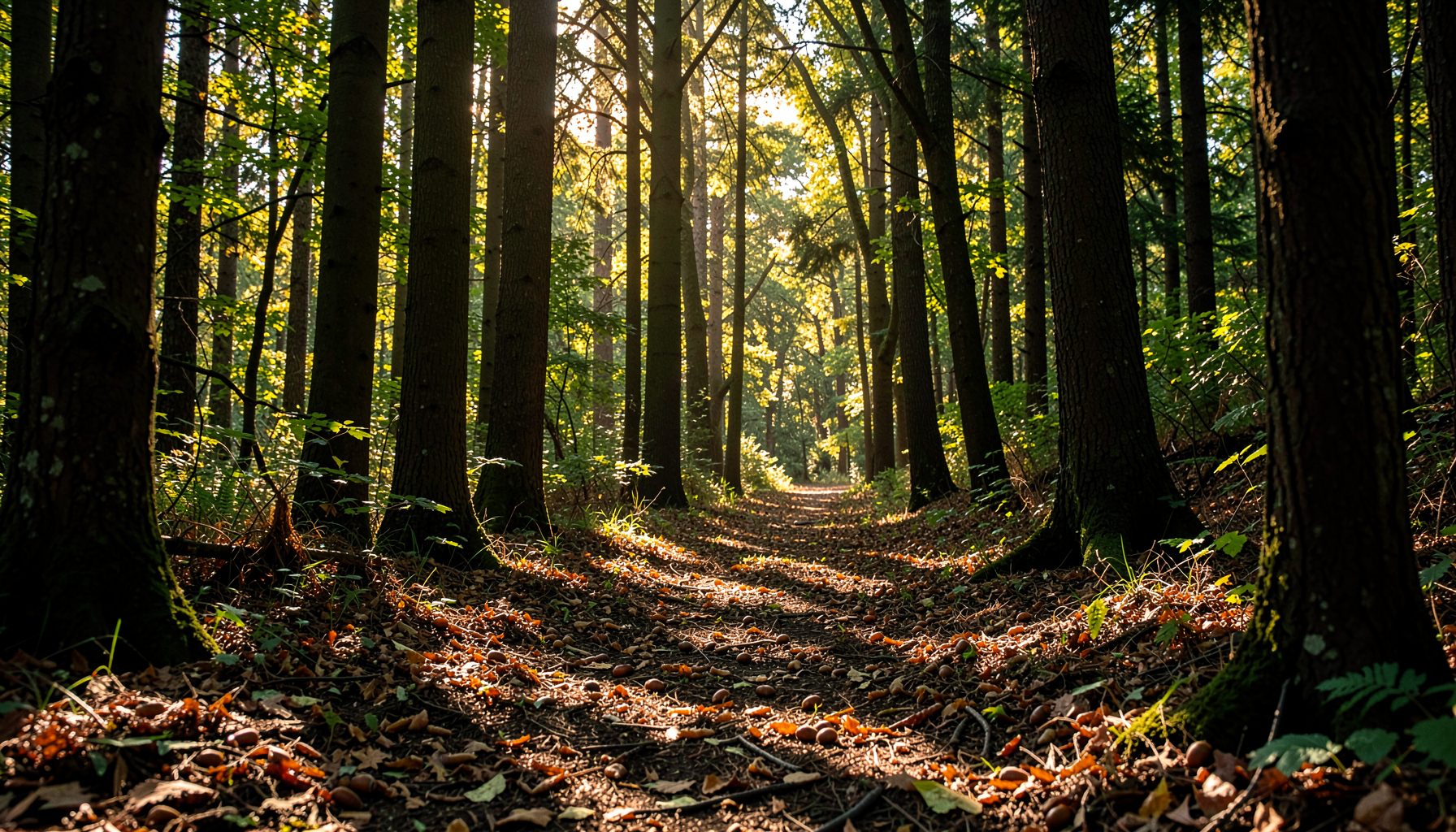
Signs of a Healthy Streamside Forest
A streamside forest, also called a riparian buffer, is the living boundary between flowing water and the surrounding land. It may include mature hardwoods, young saplings, shrubs, grasses, fallen branches, leaf litter, and exposed roots woven into a complex habitat. When these layers work together, they protect the stream while supporting wildlife and filtering runoff.
Learning to read this landscape is useful for volunteers, landowners, students, and anyone who spends time near a creek. A healthy forest beside a stream does not have to look perfectly tidy. In fact, natural complexity is often one of its strongest signs.
The best observations focus on relationships: how vegetation shades the water, how roots hold the bank, whether wildlife can move through the area, and how the forest responds after storms. These clues reveal the condition of the entire watershed more clearly than any single tree or plant.
A Layered Plant Community
Healthy streamside forests contain several vegetation layers. Tall canopy trees such as oaks, sycamores, maples, river birches, and walnuts create shade above the creek. Beneath them, smaller trees and saplings fill gaps, while shrubs, ferns, wildflowers, sedges, and grasses cover the lower levels.
This layered structure provides many ecological services at once. A closed or partly closed canopy cools stream water, which is important for aquatic insects and fish. Shrubs offer nesting cover and berries for birds. Ground-level plants slow rainwater before it reaches the bank, reducing the force of runoff.
Look for a mixture of ages and sizes rather than a stand made up entirely of mature trees. Young seedlings indicate that the forest can renew itself. Fallen trees and standing snags also have value: they provide shelter, nesting cavities, fungi, and food for insects. A forest floor with leaves, twigs, and decomposing wood is usually healthier than a heavily cleared or closely mowed one.
Stable Banks And Clear Water
The streambank should appear anchored by a broad network of living roots. Some roots may be visible along the water’s edge, but they should generally hold soil in place rather than hang from large collapsing sections. A stable bank has a gently irregular shape, small terraces, and vegetation reaching close to the channel.
During rain, this root system helps absorb and slow runoff. It reduces erosion and keeps sediment from clouding the water. Clear water is not always proof of a healthy stream, since clarity can change after storms, but persistent muddy flows and freshly deposited soil often point to an unstable watershed.
Observe the stream after a period of rainfall if it is safe to do so. Healthy riparian vegetation helps prevent water from rushing directly into the channel. Where the buffer is functioning well, the bank remains relatively intact, and the surrounding soil does not show deep rills, gullies, or broad bare patches.
Natural woody debris can also support stream health. Logs and branches in the channel create pools, shelter, and varied flow patterns. They should not be confused with dangerous blockages or accumulated trash. A sound streamside forest balances movement and structure without sending excessive sediment downstream.
Shade, Moisture, And Seasonal Change
Temperature is a vital but often overlooked sign of a functioning riparian corridor. Tree canopies cast shade across all or part of the stream, limiting excessive warming during summer. A cool, shaded channel can hold more dissolved oxygen and provide better conditions for aquatic life.
The ground beneath a healthy forest often remains moist without being permanently waterlogged. You may see mosses, moisture-loving sedges, jewelweed, ferns, and other plants adapted to periodic flooding. At the same time, a diverse buffer usually includes species that occupy slightly higher and drier ground, creating a gradual transition from stream to upland.
Seasonal change should be visible. Spring wildflowers, summer foliage, autumn leaf fall, and winter bark and branching patterns all contribute to habitat value. Native plants are especially important because they are adapted to local soils and climate and tend to support regional insects and wildlife. Learning how native trees produce and disperse seeds can deepen this understanding; collecting seeds in parks can connect urban observations with long-term forest restoration.
| Sign to Observe | What It May Indicate | Warning Sign |
|---|---|---|
| Several vegetation layers | Diverse habitat and ongoing forest regeneration | Mowed ground or a single layer of vegetation |
| Roots holding the bank | Reduced erosion and stronger soil structure | Slumping banks, exposed soil, or deep gullies |
| Shade across the channel | Cooler water and improved aquatic conditions | A completely open, overheated stream |
| Fallen wood and leaf litter | Nutrient cycling and wildlife shelter | A sterile, cleared forest floor |
| Native seedlings and saplings | Natural renewal of the forest | Few young plants beneath mature trees |
| Birds, insects, amphibians, and mammals | Connected habitat and food availability | Very little wildlife activity |
| Limited invasive plant coverage | Space for native communities to thrive | Dense mats or thickets displacing native plants |
Wildlife And Natural Regeneration
A living riparian buffer should show signs of use by animals. Birds may forage in shrubs or nest in cavities, while frogs and salamanders depend on shaded, moist areas near the water. Pollinators visit flowers, and insects feed on native leaves, bark, nectar, and decaying wood. Tracks, scat, chewed nuts, feathers, and burrows can reveal activity even when animals remain hidden.
Wildlife diversity tends to increase when the forest connects with other wooded areas, wetlands, or meadow habitat. Continuous vegetation gives animals cover as they move along the stream corridor. A narrow but connected buffer can provide more value than a wider isolated patch surrounded by roads or lawns.
Natural regeneration is another important clue. Search beneath mature trees for seedlings, especially near openings where enough light reaches the forest floor. A range of young plants suggests that seeds are germinating and surviving. If seedlings appear but are repeatedly browsed, trampled, or overwhelmed by invasive vines, the forest may need targeted care.
Seed collection and propagation can help strengthen this renewal process when carried out responsibly. Programs such as Growing Native connect community members with native hardwood and shrub seeds that can be grown into streamside seedlings. That work supports future canopy cover, bank protection, and habitat across the Potomac River watershed.
Invasive Plants And Human Disturbance
A healthy forest may contain a few nonnative plants, but invasive species become a concern when they dominate the understory or prevent native regeneration. English ivy, garlic mustard, Japanese stiltgrass, multiflora rose, and invasive honeysuckles can form dense growth that changes soil conditions and crowds out native plants.
Look for whether native seedlings have room to grow. A forest floor covered in one aggressive plant, even if it appears green, usually has low structural diversity. Heavy infestations can also reduce food sources for specialized insects and simplify habitat for birds and other animals.
Human impacts often appear as repeated patterns. Compacted soil, tire tracks, informal trails, dumped waste, lawn encroachment, and construction near the bank can interrupt the buffer’s ecological functions. Fencing, planting, stormwater controls, or carefully planned restoration may be needed where disturbance is severe.
Observation should come before intervention. Do not remove plants, move logs, or enter unstable banks without permission and appropriate guidance. Record what you see with photographs, dates, and broad location notes. This information can help conservation groups distinguish a temporary seasonal condition from a persistent management problem.
Practical Ways To Read A Stream
A simple field visit can reveal a great deal when observations are systematic. Start at a safe access point and scan from the stream channel outward. Note the canopy, understory, bank shape, ground cover, water appearance, signs of wildlife, and evidence of human activity. Repeating the same observations in different seasons can show whether the forest is improving or declining.
Use several senses, while avoiding contact with unknown water or plants. Listen for birds and flowing water, look for tracks and seedlings, and notice whether the area smells like healthy leaf litter or stagnant waste. A phone camera, notebook, tree guide, and simple map can make records more useful for schools, volunteer groups, and restoration teams.
Recommended habits for a careful streamside assessment include:
- Check for vegetation in tall, middle, and ground-level layers.
- Look for native seedlings, stable roots, and natural leaf litter.
- Compare sunny openings with shaded sections of the same stream.
- Record invasive plants, erosion, litter, and stormwater damage without disturbing the site.
- Return at another time of year to track changes in water, wildlife, and regeneration.
These observations can become a practical form of watershed stewardship. A school group might compare two nearby creeks, a family might document trees in a local park, and a workplace team might help collect native seeds during the proper season. Each activity builds familiarity with the living systems that protect drinking water and downstream communities.
From Recognition To Restoration
Recognizing a healthy streamside forest changes the way people value ordinary details. A fallen branch becomes habitat, a shrub becomes a source of food and cover, and a patch of leaf litter becomes part of the nutrient cycle. The forest’s apparent untidiness often reflects active ecological processes rather than neglect.
Long-term stream protection depends on maintaining these processes across many properties and communities. Native tree planting, invasive plant control, erosion prevention, responsible land use, and seed collection all contribute to stronger riparian corridors. Small actions matter most when they are connected to local restoration goals and carried out with care.
Growing Native provides opportunities for individuals, families, schools, community organizations, and workplaces to participate in this work. To learn about current volunteer activities and take part in watershed restoration, register to volunteer. By observing local forests and helping supply native seedlings, you can support cleaner water, healthier habitat, and a more resilient Potomac watershed.