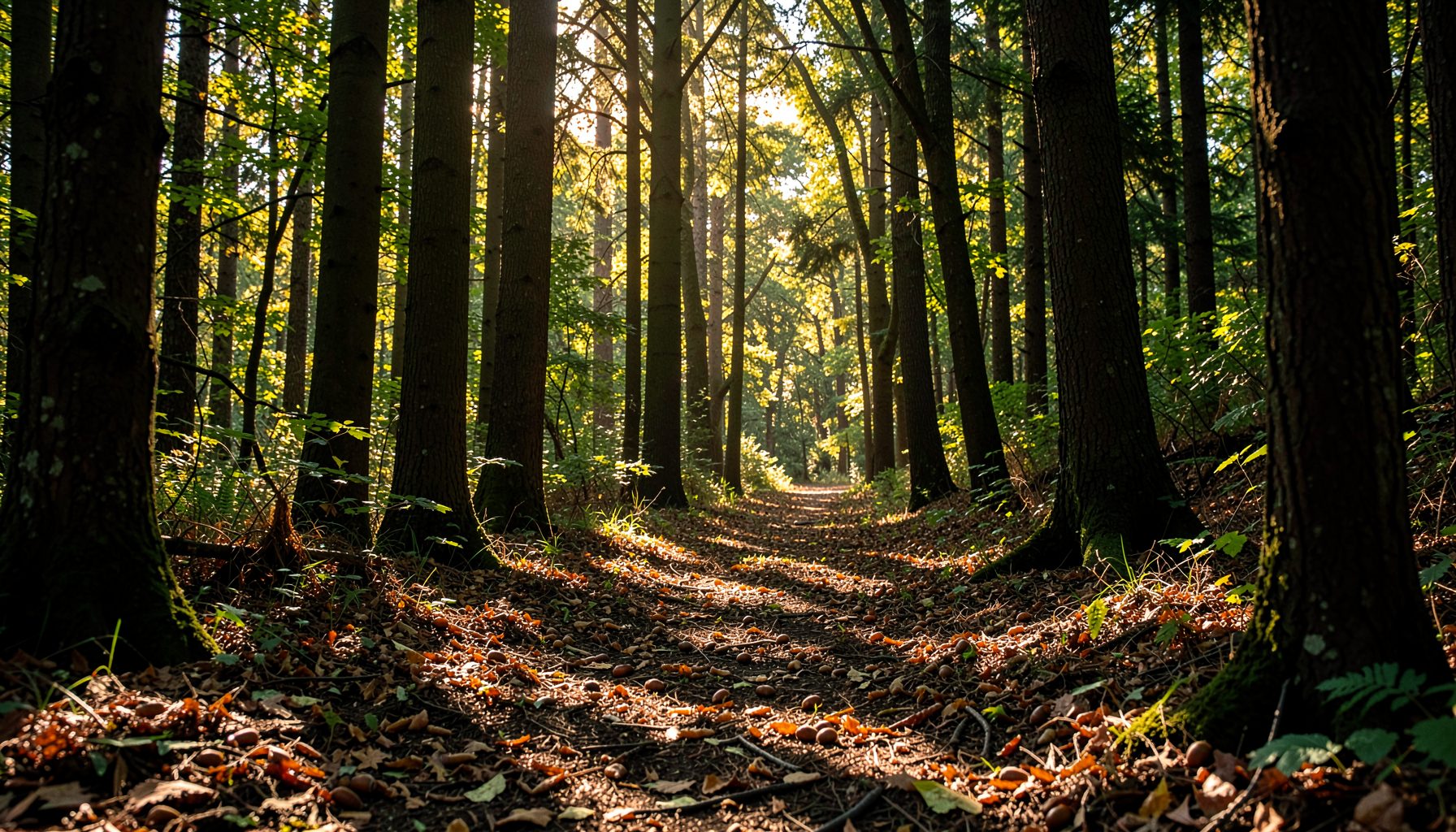
Make Seed Collection Accessible for Volunteers with Mobility Aids
How to make seed collection accessible for volunteers with mobility aids starts with treating access as a design condition rather than an afterthought. Wheelchair users, people using walking frames, canes or mobility scooters, and volunteers with fatigue or balance limitations should be able to contribute fully to a seed day. The practical aim is to offer a useful task, a safe route and suitable equipment without asking anyone to explain or prove their limitations.
Growing Native organises volunteers to collect native hardwood and shrub seeds, including acorns and walnuts, that state nurseries grow into streamside seedlings. An Australian version can draw on eucalypt, wattle, casuarina, banksia and riparian seed, then direct it to council nurseries, Landcare and Bushcare groups, and specialist native-plant growers. This local market rewards accurate provenance and healthy seed, so collection should support restoration rather than simply gather material.
Access also means predictable information. Publish the terrain, surface, distance, toilets, shade, seating and available roles before registration, and provide a direct contact for discussing adjustments. Organisers should check state and territory biodiversity rules, council permits and protected-species restrictions. Disability access guidance under the Disability Discrimination Act 1992 and related standards can also inform a more inclusive event.
Map a route that conserves energy
Start with a site audit that follows the whole journey, not just the forest edge. Check parking or drop-off points, path widths, gradients, loose bark, roots, mud and creek crossings, as well as the distance to toilets. A route that looks short on a map can require several energy-consuming transfers. Where a creek or steep bank limits access, establish another collecting station on firm ground rather than treating the nearest tree as the only option.
Australian conditions make route selection particularly important. Melbourne, Adelaide and Perth can experience intense summer heat, while Brisbane’s humidity and heavy rain can reduce grip and visibility. Sydney’s bushland paths may remain wet and uneven even during mild weather. Many urban remnants sit beyond easy public transport, so provide an accessible parking space, a clearly marked pickup point and a short route connecting several suitable trees.
Design the day around short loops rather than one exhaustive walk. Invite volunteers to rotate between collecting, sorting and recording stations, and build in regular rest points with shade and seating. A volunteer should be able to decline a difficult section without missing the main activity. Where distance between trees is substantial, use a small accessible shuttle or arrange a vehicle-supported drop-off closer to each collection area.
Offer meaningful roles at different heights
Seed collection should not depend on climbing, pulling down branches or spending the entire event on uneven ground. Identify which trees have suitable low-hanging fruit, prepare ground-level work areas and give each volunteer a choice of tasks. These choices allow people to contribute without creating a hierarchy based on physical strength.
| Collection task | Less adaptable method | Accessible alternative | Benefit |
|---|---|---|---|
| Reaching seed | Climbing or pulling branches downward | Long-handled picker used from stable ground | Reduces falls and joint strain |
| Selecting ripe seed | Walking through dense understorey | Seated station with trays and magnifiers | Lowers walking demands |
| Gathering fallen seed | Repeated bending and kneeling | Raised tray, scoop or ground-level mat | Protects backs and knees |
| Recording findings | Standing with a clipboard | Lapboard, phone or voice recording | Supports varied mobility and vision |
| Sorting collections | Carrying several full containers | Smaller batches and seated sorting table | Limits fatigue and lifting |
Descriptions of each role should state the physical demands plainly. “Collecting from a flat, paved area” is more useful than “easy access,” while “seated work with occasional transfers” gives volunteers information they can use when deciding what suits them. Avoid requiring a minimum walking pace or a fixed number of steps.
Keep seed handling straightforward for everyone. Provide shallow trays, clear labels and containers that can be carried with one hand, and place collection stations within easy reach of the seated work area. Volunteers can record findings on a phone or clipboard, but a coordinator should check species and quantities before batches are moved. This prevents fatigue from becoming a reason to leave the event early.
Provide adaptive equipment and trained support
Adaptive tools can remove barriers without changing the conservation task. Useful equipment includes lightweight picking scoops, grips, long-handled fruit pickers, ergonomic kneeling pads, raised sorting tables and waterproof lapboards. An all-terrain chair can help on soft ground, although volunteers should be able to transfer independently wherever possible. Test unfamiliar tools at a practice station before the seed collection begins.
Support should include more than equipment. Brief volunteers on the site conditions, offer a buddy system and make it clear that nobody will lift or transfer another person without consent and appropriate training. Keep drinking water, sunscreen, protective clothing and first-aid supplies available. In hot weather, shorten collection periods, schedule morning sessions and provide a cool place to rest. Personal attendants and support workers are welcome, with their role recorded confidentially.
Partnerships can spread equipment and expertise. A council arboretum may already own pruning tools, all-terrain chairs or trained seed collectors, while a nursery can advise on clean handling and appropriate species. Growing Native’s guidance to partner with an arboretum offers a useful event model that Australian groups can adapt through a local nursery, botanic garden or Landcare coordinator.
Teach identification and keep reliable records
Education should accommodate different ways of learning and communicating. Teach tree identification through leaves, bark, fruit and habitat rather than relying only on visual comparisons. Large-print identification sheets, tactile seed samples, captioned videos, Auslan interpretation and spoken instructions can widen participation. Give volunteers time to compare samples with reference collections, and ensure that the person recording information can hear and see the coordinator clearly.
Photographic records can support education without requiring extended handwriting. Growing Native’s advice on photograph tree seeds is particularly useful for close-up reference images, scale cues and seed condition. Provide a phone stand, a plain background and a simple naming card, then have a coordinator check images against the collection record before the seeds are catalogued.
Each batch should record the species, parent tree, collection location, habitat, date, collector and quantity. This information helps nurseries select suitable seed and protects the local genetic provenance required by Australian restoration programs. Clean footwear and tools between sites, keep seed containers labelled and closed, and check interstate movement rules before transporting material. State biodiversity laws, council conditions and protected-species lists must be confirmed for the exact location rather than assumed from nearby events.
Create a repeatable checklist for welcoming volunteers
Share one accessible-event checklist with every coordinator, nursery partner and site host. It should cover planning, equipment, communication, weather and follow-up, making good practice easier to maintain across multiple seed days. Volunteers should know what to expect before they arrive and be able to contact an organiser if their needs change.
- Publish an access guide at least two weeks before the event, including surface conditions, route length, gradients, toilets, parking, shade, seating and whether seating is fixed or portable.
- Describe each volunteer role with specific physical demands, estimated distances and alternatives that can be performed while seated.
- Reserve accessible parking or drop-off space, provide firm rest seating and keep the shortest accessible route free from obstacles and loose equipment.
- Train staff in respectful disability communication, consent, emergency procedures and the safe limits of personal assistance.
- Ask for confidential feedback during or after the event, then adjust routes, tools and instructions for the next collection day.
A short orientation can bring these details together without creating a lengthy briefing that excludes some volunteers. Explain the seed categories, demonstrate the adaptive tools, identify rest areas and confirm the first task. Allow volunteers to change roles, take a break or finish early without pressure, then direct them toward accessible transport or a designated pickup point.
Choose one accessible collection site, contact the relevant council nursery, Landcare group or native-plant specialist, and register a volunteer place before the next seed season. Build the route, roles and support around mobility from the outset so that access becomes part of the event’s conservation success rather than a separate accommodation added later.