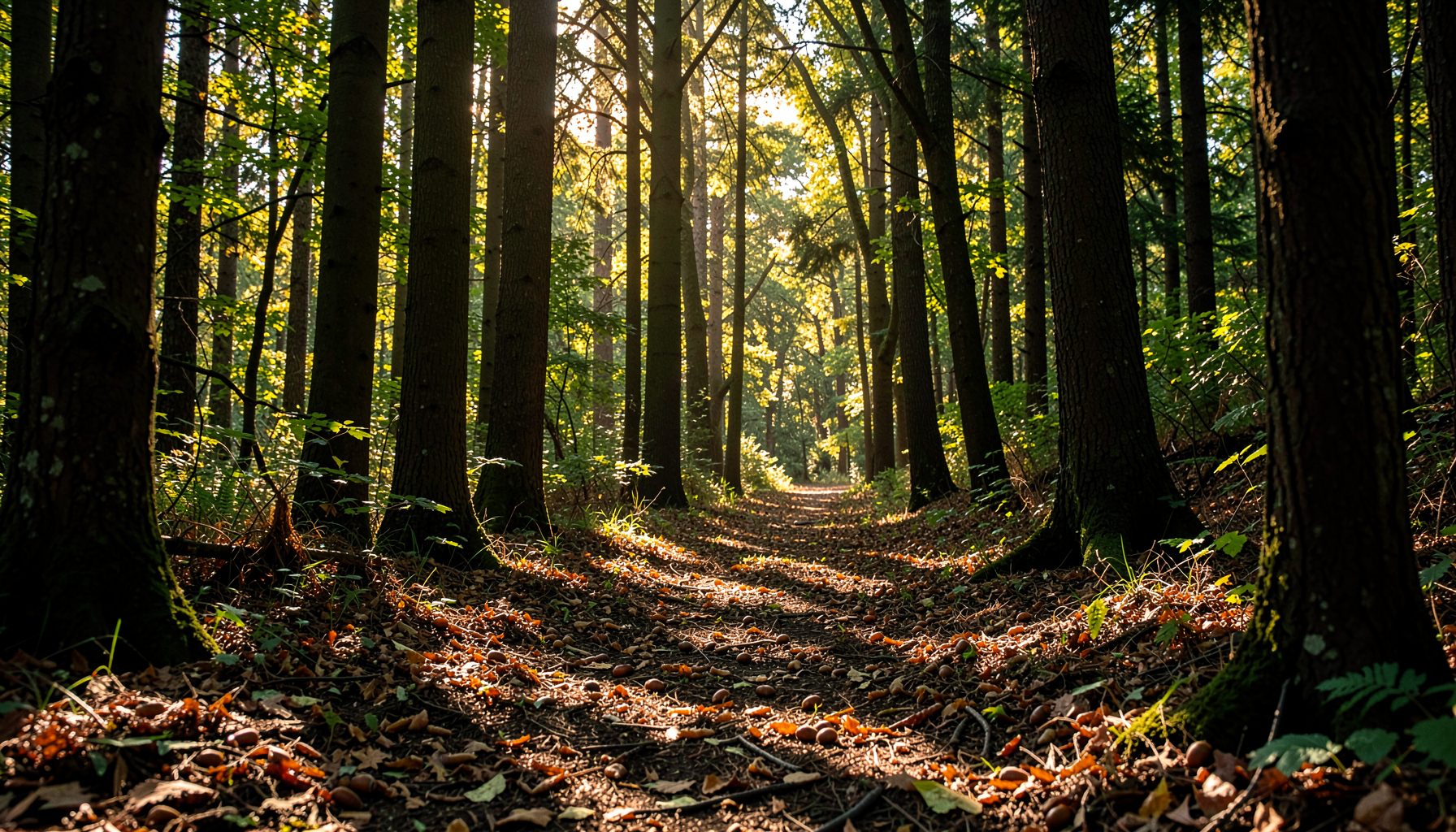
How to Identify a Black Tupelo by Its Bark and Drupes
Black tupelo is a valuable native tree of eastern North America, especially along wooded streams, wet lowlands, and mixed hardwood forests. Known scientifically as Nyssa sylvatica, it is also called black gum or sour gum. The species can be difficult to identify at a glance because its appearance changes significantly with age, habitat, and season.
Bark and fruit provide two of the most useful clues. Mature trunks develop distinctive gray, blocky bark, while female trees produce small, oval drupes that ripen to a deep blue or blue-black color. Looking at both traits together is more reliable than depending on a single feature.
Correct identification matters when collecting native seed or documenting forest diversity. Black tupelo supports birds and other wildlife, tolerates wet soils, and contributes to the ecological health of streamside forests throughout the Potomac River watershed.
Start with the tree’s overall form
Black tupelo usually grows as a medium to large deciduous tree, often reaching 30 to 60 feet in forest settings. In favorable conditions, older specimens may become considerably taller. Young trees commonly have a narrow, upright crown, while mature trees develop a broader, irregular shape with horizontally spreading branches.
The leaves are arranged alternately rather than directly opposite each other along the twigs. They are typically oval to oblong, with smooth margins and a glossy green upper surface. In autumn, the foliage may become brilliant scarlet, orange-red, or purplish red, making black tupelo one of the most striking trees in an eastern woodland.
The species prefers moist, acidic soils but can also grow on upland sites with adequate drainage. It is frequently found near wetlands, swamps, floodplains, ponds, and stream corridors. Habitat is a helpful supporting clue, though it should not replace careful inspection because several other native trees share similar environments.
Read the bark on young and mature trees
Young black tupelo branches and trunks often have relatively smooth, gray bark. The surface may show fine horizontal marks and a subtle, satiny texture. On saplings, this smooth appearance can make the tree resemble beech, hornbeam, or another gray-barked hardwood.
As the trunk ages, the bark changes dramatically. Mature black tupelo bark becomes dark gray and develops deep, irregular furrows that divide the surface into thick, blocky ridges. The ridges may look like small, chunky plates arranged in a rugged pattern. In some trees, the bark has a nearly alligator-like texture, although the blocks are generally less uniform than those of some other species.
Color alone is not enough for identification. Lighting, moisture, lichen, and age can make bark look nearly black, silver-gray, or brownish. Focus on the combination of rough blocky ridges, an often straight trunk, alternate leaves, and the tree’s wet-forest habitat. Avoid removing bark; its texture can be examined without harming the tree.
Confirm the fruit with its shape and color
The fruit of black tupelo is a drupe, meaning the fleshy outer portion surrounds a single hard seed. These fruits are small, usually less than an inch long, and commonly shaped like an elongated oval or miniature plum. They are carried on slender stalks and often hang singly or in small clusters from the branches.
As they mature in late summer or fall, the drupes change from green to reddish tones and then become dark blue, blue-black, or purplish-black. Their color is often one of the clearest seasonal signs of black tupelo. Birds readily eat the fruits and help disperse the seeds, making the tree an important part of a native woodland food web.
Fruit production can vary from year to year, and only female black tupelo trees produce noticeable drupes. A tree without fruit is not necessarily a different species. Look for other clues, including the leaf arrangement, bark, crown shape, and the presence of nearby trees that may support pollination.
| Feature | Black tupelo | Common look-alike |
|---|---|---|
| Mature bark | Dark gray, deeply furrowed, chunky or blocky ridges | Beech usually retains smooth, pale gray bark |
| Fruit | Small, oval, blue-black drupe on a slender stalk | Persimmon fruit is generally larger and orange when ripe |
| Leaf arrangement | Alternate along the twig | Dogwood leaves are opposite |
| Leaf margin | Smooth or nearly smooth | Many cherries have fine serrations |
| Autumn color | Often vivid red, scarlet, or purple-red | Some look-alikes turn yellow or brown |
| Typical habitat | Moist woods, wetlands, stream margins, and uplands | Species such as willow favor wetter, more open sites |
Distinguish black tupelo from similar trees
American beech is a frequent source of confusion when examining young black tupelo. Beech bark remains smooth and light gray even on large trunks, while black tupelo develops rough, broken ridges with age. Beech leaves also have noticeably straight, parallel side veins and a more strongly toothed edge.
Black cherry can overlap with black tupelo in habitat and mature size. Its bark often forms scaly plates with turned-up edges, giving the trunk a flaky appearance rather than the heavy, blocky furrows of an older tupelo. Black cherry leaves have fine teeth along the margins, whereas black tupelo leaves are generally smooth-edged.
Persimmon is another useful comparison because it can have dark, blocky bark and similar dark fruit. Persimmon fruits are usually larger, rounder, and orange or yellow-orange when ripe. Its leaves tend to be thicker and more leathery, while black tupelo fruit remains small, oval, and blue-black.
Use several field clues together
A reliable field identification combines bark, leaves, fruit, twig arrangement, and habitat. Begin by observing the whole tree from a distance. Note whether the crown is narrow or spreading, whether the trunk is straight, and whether the tree stands in a wet woodland, beside a stream, or on a drier slope.
Next, inspect a reachable branch without breaking it. Confirm that the leaves are alternate and mostly smooth-edged. Check for a glossy surface and the possibility of red or scarlet autumn color. If fruits are present, examine their stalks, size, shape, and ripening color.
Photographs can help with later verification, particularly when they show the full tree, a close view of the bark, a leaf attached to its twig, and the fruit. Record the date and habitat as well. Seasonal observations are valuable because a summer photograph may show green leaves and developing fruit, while a winter photograph may provide the clearest view of mature bark and branching form.
For educational resources and local conservation information, visit Growing Native. Learning to recognize native trees supports better stewardship decisions, whether you are surveying a backyard, school property, park, or streamside forest.
Handle drupes responsibly during seed collection
Black tupelo fruit may attract birds before a person has a chance to find it. When drupes are available, collect only from healthy, correctly identified trees and follow any permission requirements for public or private land. Leave plenty of fruit for wildlife and natural regeneration.
A ripe drupe should be firm to slightly soft, with mature blue-black coloration. Avoid fruit that is moldy, badly damaged, or still green unless a trained restoration program provides specific collection instructions. Keep seed from different trees separated when possible, and label each collection with the species, location, date, and collector.
Seed collection is more useful when it contributes to a broader restoration effort. Native hardwoods and shrubs grown from locally appropriate seed can help stabilize streambanks, shade waterways, and improve habitat. A family seed-sorting activity can also turn identification practice into a hands-on lesson; Growing Native explains how to host a seed-sorting party.
Field habits that improve identification
Before collecting or recording a tree, use these practical habits:
- Examine mature bark as well as younger twigs, since texture changes substantially with age.
- Look for small, oval blue-black drupes on slender stalks rather than relying on fruit color alone.
- Check that leaves are alternate and mostly smooth-edged.
- Compare the tree with beech, black cherry, persimmon, and other nearby species.
- Photograph the trunk, leaves, fruit, and surrounding habitat for later verification.
A hand lens can reveal fine leaf margins, twig features, and fruit stalks that are difficult to see from the ground. Binoculars are useful when the lowest branches are high, especially on mature trees growing in dense woods.
If identification remains uncertain, do not collect the seed. Mark the location, return during another season, or consult a local botanist, extension office, native plant group, or conservation organization. Careful uncertainty is better than introducing an incorrectly identified species into a restoration collection.
Black tupelo identification becomes easier when bark and drupes are treated as complementary evidence. The rugged gray bark of an older trunk, the alternate glossy leaves, the vivid fall color, and the small blue-black fruits together create a dependable field profile. Contact the Growing Native team to learn how your observations, seed collection, or volunteer efforts can support healthier forests and waterways across the Potomac River watershed.