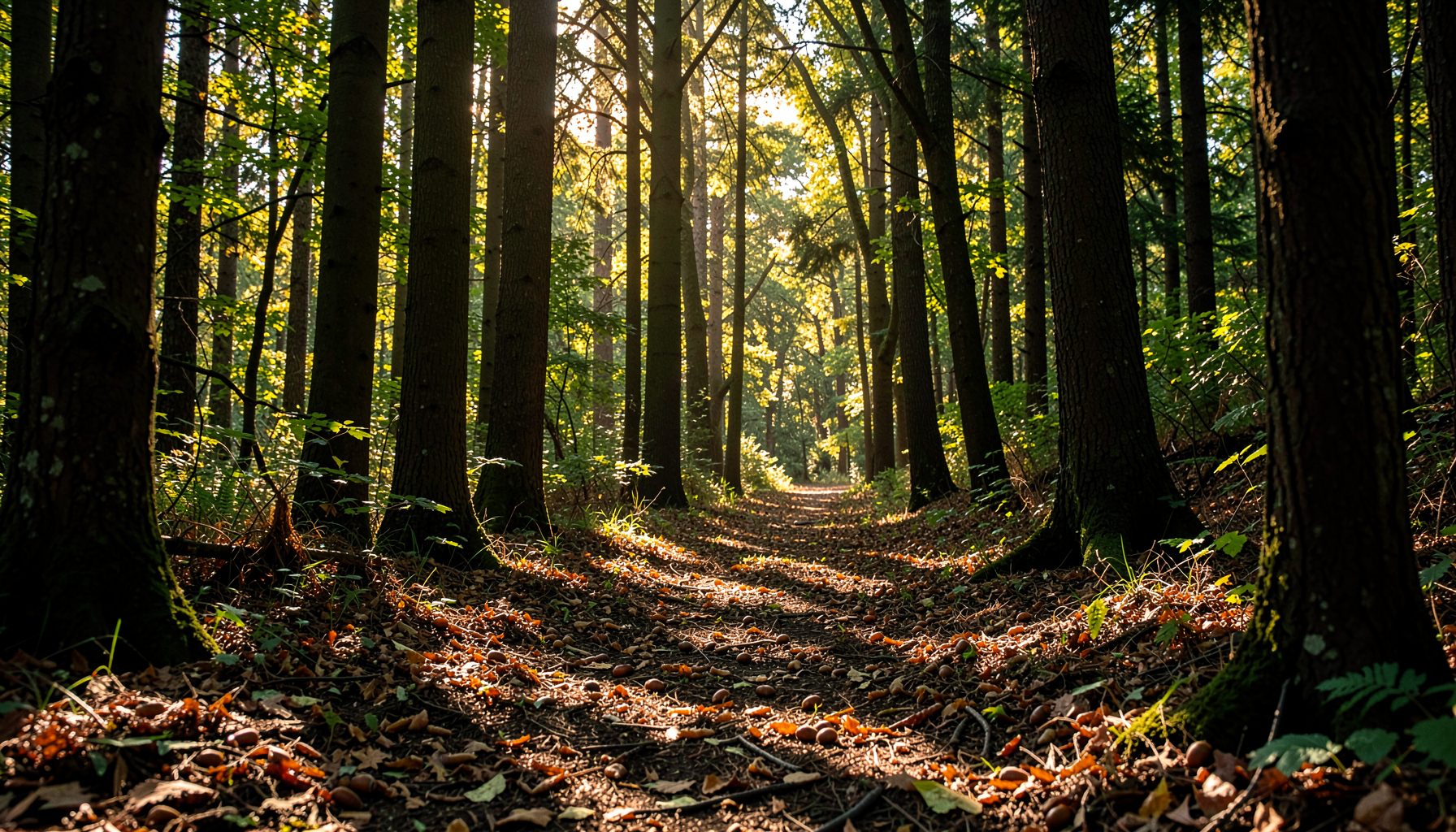
How to identify a black gum tree by leaves and fruit
Black gum (Nyssa sylvatica), also called black tupelo, sour gum, or pepperidge, is a native eastern North American tree valued for its wildlife habitat, brilliant autumn color, and ability to grow in moist forest soils. It occurs throughout much of the Potomac River watershed, from low stream valleys to upland woods and wetland edges.
Learning to recognize this species takes more than noticing one feature. Several trees have glossy leaves or dark berries, and young black gums may look different from mature specimens. The most reliable identification comes from combining leaf shape, arrangement, bark, fruit, growth form, and habitat.
For conservation volunteers, accurate tree identification has a practical purpose. Knowing which native trees are producing fruit helps people understand forest regeneration and identify seed sources that support future restoration. Black gum is especially useful in landscapes where clean water, stable stream banks, and diverse woodland habitat are priorities.
Start with the leaves
Black gum leaves are simple rather than divided into leaflets. They are usually oval to elliptical, with a smooth edge and a pointed tip. Some leaves are wider near the middle, while others have a slightly rounded or wedge-shaped base. Their shape can vary on the same tree, so a single unusual leaf should not rule out the species.
The upper surface is typically dark green and glossy during the growing season. The underside is paler, sometimes with a slightly gray or blue-green cast. Leaves commonly measure about 2 to 5 inches long, though size depends on the tree’s age, sunlight, moisture, and growing conditions.
A useful detail is the leaf stalk, or petiole. Black gum petioles are often slender and may show a reddish tint, particularly later in the season. The leaves are arranged alternately along the twig, meaning they do not emerge in directly opposite pairs. This alternate arrangement helps distinguish black gum from several other woodland trees.
Watch the autumn color
Black gum is one of the most striking native trees in the eastern forest during fall. Its leaves may turn yellow, orange, scarlet, deep red, or purple, sometimes displaying several colors at once. In a mixed forest, the intense red foliage can make the tree noticeable even before its bark or fruit is examined.
Color alone is not a dependable identification feature because many native species become red in autumn. The timing and combination of color are more useful when paired with the leaf’s smooth margin and glossy surface. Black gum often holds its leaves after nearby deciduous trees have begun to drop theirs, adding to its seasonal visibility.
Weather and site conditions influence fall display. Trees receiving more sunlight may develop stronger red tones, while shaded trees can remain green longer or show muted color. Look for several leaves from different parts of the crown rather than relying on one leaf affected by disease, insects, or drought.
Identify the fruit and flowers
Black gum produces small, oval fruits that mature from late summer into fall. They are usually dark blue, blue-black, or nearly black when ripe and often measure less than an inch long. Each fruit generally contains a single stone. The fruits may hang singly or in small clusters on slender stalks.
The fruit is an important field clue, but it can be easy to overlook because it is small and often hidden among glossy leaves. Birds and other wildlife eat the fruit, so a tree may have very little left by the time someone inspects it. Look beneath the canopy as well; fallen fruit may remain on the ground even after the upper branches are bare.
Flowers appear in spring, often after the leaves begin to emerge. They are small, inconspicuous, and greenish-white, so they are less helpful for casual identification than leaves and fruit. Black gum trees may produce male and female flowers on separate trees, although some trees can carry flowers of both types. Fruit production can therefore vary from one tree to another.
Use bark, twigs, and growth form
Young black gum trees often have gray bark with a relatively smooth texture. As the tree ages, the bark develops a distinctive blocky or chunky pattern, with deep furrows and ridges that can make the trunk look like it is covered in irregular plates. Mature bark is often gray-brown, though color changes with light, moisture, and age.
The tree usually develops a straight trunk and a narrow, somewhat pyramidal crown when young. Older trees may become more open and irregular, especially when growing in a forest gap or along a woodland edge. Black gum can reach substantial heights, but trees in wet soils, dense shade, or poor sites may remain much smaller.
Twigs are slender and may be reddish-brown to gray. The buds are relatively small and pointed. When leaves are absent, the combination of alternate branching, rough mature bark, and a narrow crown can still provide useful evidence. Winter identification is harder, so examine several features before making a firm determination.
Compare similar native trees
Black gum is sometimes confused with red maple, black cherry, persimmon, and various dogwoods. These species can share parts of its habitat or display similar autumn colors, but their leaves, fruits, or branching patterns provide important differences.
Red maple has leaves with clear lobes and toothed margins, while black gum leaves are generally unlobed and smooth-edged. Black cherry leaves are finely toothed and often have a more elongated shape. Persimmon leaves are also smooth-edged, but they tend to be thicker and less glossy, and the tree’s larger orange fruit is very different from black gum’s small blue-black fruit.
Several dogwood species have opposite leaves, meaning leaf pairs emerge across from each other on the twig. Black gum’s alternate leaf arrangement separates it from those trees. Serviceberry may also produce small dark fruits, but its leaves usually have fine teeth and its smooth gray bark has a different texture.
| Feature | Black gum | Red maple | Black cherry | Persimmon |
|---|---|---|---|---|
| Leaf arrangement | Alternate | Opposite | Alternate | Alternate |
| Leaf edge | Usually smooth | Toothed and lobed | Finely toothed | Smooth |
| Fruit | Small blue-black drupe | Paired winged seeds | Dark berry-like drupe | Larger orange fruit |
| Fall color | Red, orange, purple, or yellow | Red, orange, or yellow | Yellow to red | Yellow, orange, or red |
| Mature bark | Blocky, furrowed plates | Scaly or ridged | Dark, flaky plates | Thick, blocky, dark gray bark |
| Typical habitat | Moist woods, swamps, stream margins, uplands | Broad range, including moist sites | Fields, edges, and forests | Dry to moist woods and old fields |
Check the habitat and season
Black gum grows in a wide range of environments, but it is strongly associated with moist forests, swamps, wet flatwoods, floodplains, stream margins, and pond edges. It also grows on drier upland sites, especially in acidic soils. A tree beside a small creek is more likely to be black gum if its leaves and fruit match the other identifying traits.
Its tolerance for wet conditions makes it valuable in watershed restoration. The root system can help hold soil near waterways, while the tree contributes shade, leaf litter, cavities, and fruit for wildlife. Like other native hardwoods, it forms part of a larger plant community rather than functioning as an isolated landscaping specimen.
Season matters when identifying any deciduous tree. In spring and summer, focus on leaf arrangement, shine, margin, and shape. In late summer and fall, add fruit and foliage color. In winter, rely more heavily on bark, twigs, buds, and the tree’s overall form. Taking photographs at different times of year can make a field identification much more reliable.
Record observations for restoration work
A careful observation can include the date, location, habitat, approximate tree size, leaf features, fruit color, bark texture, and a photograph of both the leaf and the whole tree. Avoid collecting plant material from public land or private property without permission. A clear record is often more useful than a specimen removed from the tree.
When black gum occurs near a restoration site, documenting mature trees can help show whether native species are present and whether young trees are becoming established. Monitoring should track practical indicators such as survival, growth, canopy development, stream-bank stability, and changes in invasive plant cover. Guidance on reforestation results can help connect individual observations with broader project outcomes.
Black gum seeds are enclosed in the small fruits and may be dispersed by birds and mammals. Natural regeneration is not always sufficient, particularly where deer browse heavily, invasive plants dominate, or nearby seed-producing trees are scarce. Protecting existing mature trees and maintaining a range of native species can strengthen the watershed’s long-term resilience.
Practical field recommendations
Use these habits when identifying a suspected black gum:
- Examine several leaves for a smooth edge, glossy surface, and alternate arrangement.
- Look for small blue-black fruits on slender stalks from late summer through fall.
- Check whether mature bark has irregular, blocky ridges rather than a smooth or flaky surface.
- Compare the tree with red maple, black cherry, dogwood, and persimmon before recording the identification.
- Note the surrounding habitat, season, and nearby mature trees to support the field evidence.
Black gum identification becomes easier with repeated observation, especially when the same tree is visited in more than one season. A local forest may contain many native species that support one another through shade, leaf litter, fruit, roots, and soil protection. Learning to recognize them is a direct way to become more attentive to the health of the watershed.
You can put that knowledge into practice by joining volunteer with Growing Native opportunities that connect seed collection, native tree education, and restoration across the Potomac River watershed. Each accurately identified tree adds to a fuller understanding of the living forest and the work needed to help it thrive.