How to Create a Buffer Zone Between Farmland and Streams
A streamside buffer is a strip of vegetation between cultivated fields and flowing water. It can include grasses, wildflowers, shrubs, and trees arranged in layers that slow runoff before it reaches a stream. When planned well, this living boundary protects soil, improves water quality, and creates habitat without taking productive farmland out of service unnecessarily.
Agricultural land and waterways are closely connected. Rain can carry sediment, manure, fertilizer, pesticides, and plant residue downhill into a creek or river. A thoughtfully designed riparian buffer helps capture these materials while stabilizing stream banks and reducing the force of floodwater. The result is a healthier watershed and a more resilient farm landscape.
The best design depends on slope, soil, drainage patterns, field operations, and the size of the waterway. A narrow grass strip may be useful along a gentle swale, while a larger three-zone buffer is often appropriate beside a continuously flowing stream. Local conservation staff can help translate these principles into a practical planting and maintenance plan.
Assess The Site Before Planting
Begin by walking the field edge during both dry and wet conditions. Identify the ordinary stream channel, flood-prone areas, eroding banks, springs, drainage ditches, compacted soil, and places where water leaves the field quickly. A simple sketch or GPS-enabled phone can record problem areas and show where the buffer needs to be widest.
Measure the slope from the field toward the stream. Steeper ground generally needs a wider vegetated strip because runoff gains speed as it travels downhill. Sandy or highly permeable soils may allow water to soak in readily, while compacted clay can send a larger volume of surface flow directly toward the channel.
Look at existing vegetation before removing anything. Mature native trees, volunteer shrubs, and perennial grasses may already provide valuable root structure. Invasive plants should be identified separately, since clearing them without a replacement plan can leave bare soil exposed to erosion. Check county, state, and federal requirements before working near wetlands, drainage channels, or regulated waterways.
Build A Layered Riparian Buffer
A strong streamside planting usually has three zones. The innermost zone, directly beside the water, contains native trees and shrubs suited to periodic flooding. Their roots reinforce the bank, shade the stream, moderate water temperature, and contribute fallen leaves and woody material that support aquatic life.
The middle zone contains a mixture of shrubs and smaller trees. It can intercept shallow groundwater, provide nesting and feeding cover, and create a transition between tall streamside forest and open farmland. Species such as silky dogwood, elderberry, spicebush, serviceberry, and buttonbush may work in suitable conditions, though plant choices should be based on local soils, moisture, and wildlife considerations.
The outer zone is usually a band of perennial grasses and herbaceous plants beside the crop field. This section slows sheet flow, traps sediment, and makes the boundary easier to manage with farm equipment. Native warm-season grasses, sedges, asters, goldenrods, and other deep-rooted plants can provide dependable ground cover when matched to the site.
A layered design is more effective than a row of identical trees. Different plant heights interrupt wind and runoff at multiple levels, while varied root depths improve soil structure. The buffer should still have enough open space for inspection, mowing where appropriate, and access to the stream crossing or farm road.
Choose Plants For Local Conditions
Native plants are generally the best foundation for a riparian buffer because they are adapted to regional weather, soils, and wildlife. Choose species according to moisture rather than appearance alone. Plants suited to wet floodplains may fail on a dry, elevated bank, while drought-tolerant upland species can decline if their roots remain saturated.
Use several species in each vegetation layer. Diversity reduces the chance that one pest, disease, drought, or flood event will damage the entire planting. Include trees with different mature sizes, shrubs that flower or fruit at different times, and grasses or sedges that maintain cover through much of the year.
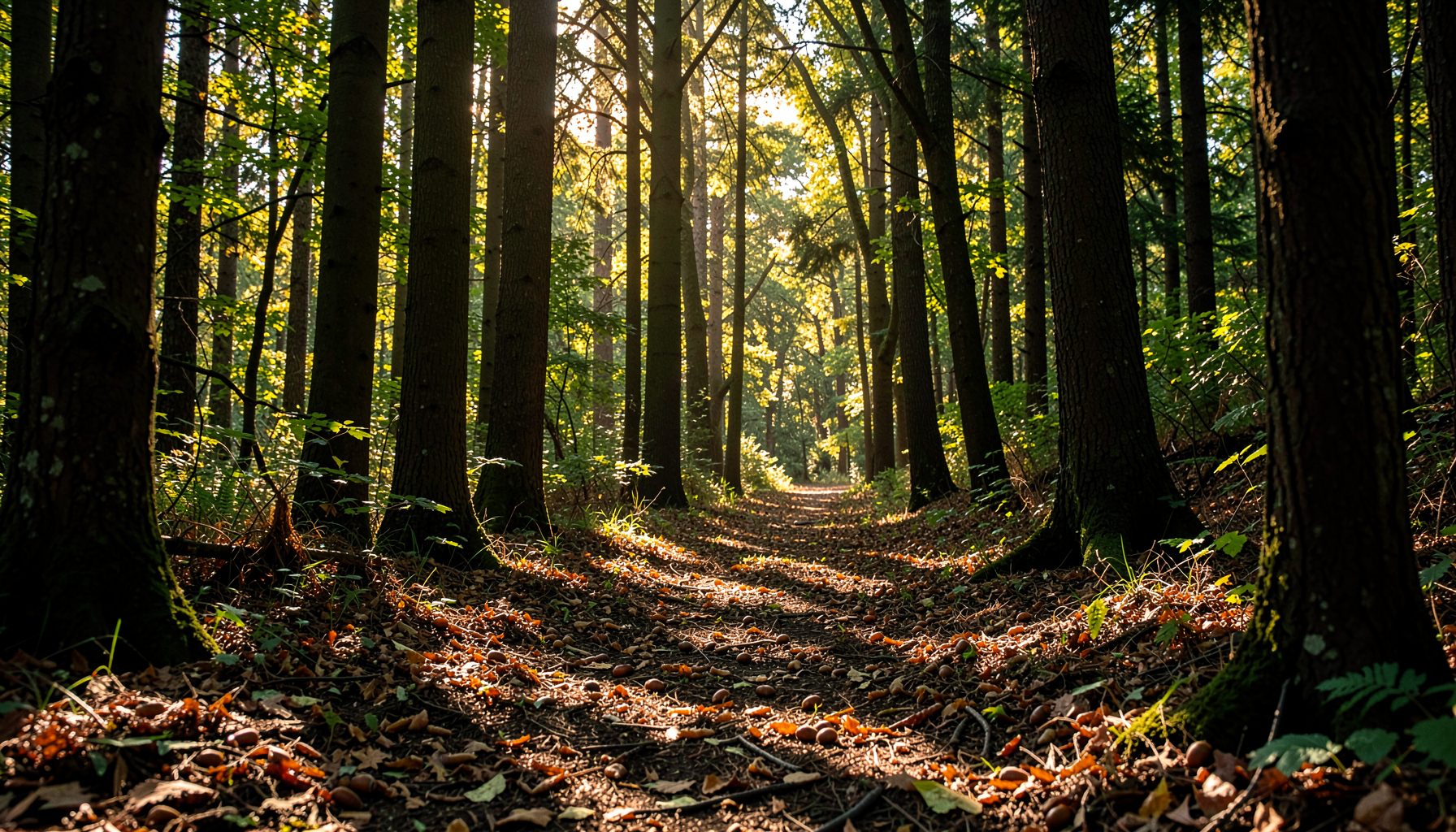
Collecting and growing locally appropriate seed can strengthen restoration efforts. Through its community conservation work, Growing Native connects volunteers with the collection of native hardwood and shrub seeds that support future streamside plantings. Acorns, walnuts, and other regionally sourced seeds can help nurseries produce seedlings suited to the broader Potomac watershed.
Avoid planting species known to spread aggressively in natural areas. Also avoid placing large trees directly under utility lines or where their mature roots and branches could interfere with farm access. A conservation planner, native plant specialist, or state nursery can help confirm species selection and spacing.
Prepare The Ground And Establish Cover
Site preparation should focus on creating reliable soil contact without exposing unnecessary ground. If the field edge is compacted, light tillage or subsoiling may be needed, but disturbing saturated soil can increase erosion. Remove competing invasive vegetation carefully and stabilize any bare areas with mulch, straw, or temporary cover.
Planting dates depend on the region and the type of plant material. Dormant trees and shrubs are often installed in late fall or early spring, while native grasses and wildflowers may establish best from late fall seeding or spring planting. Follow local guidance for seed stratification, planting depth, and moisture requirements.
Protect young plants from browsing deer, rodents, and livestock. Tree shelters, wire guards, or temporary fencing can prevent early losses. Keep equipment, manure storage, and livestock traffic outside the planted strip. Where animals need access to water, a hardened crossing or alternate watering system is preferable to allowing repeated trampling along the bank.
The first two or three growing seasons require active care. Water during extended dry periods, replace dead seedlings, control invasive weeds, and repair damage after storms. A buffer is established when its roots and ground cover are functioning as a continuous protective system, not simply when the plants are placed in the soil.
Match Buffer Width To The Landscape
There is no universal width that works for every stream and farm. A conservation professional may recommend a minimum width based on state standards, watershed goals, or funding requirements, then expand it where slopes, floodplains, or erosion risks demand additional protection.
The following ranges offer a planning framework rather than a substitute for a site-specific assessment:
| Buffer Area | Typical Vegetation | Main Function | Planning Considerations |
|---|---|---|---|
| Streamside zone | Flood-tolerant trees and shrubs | Stabilizes banks, shades water, supports habitat | Keep disturbance low; allow natural woody growth |
| Middle zone | Mixed shrubs and small trees | Filters shallow runoff and groundwater | Select species for moisture and mature size |
| Field-edge zone | Perennial grasses, sedges, and wildflowers | Slows sheet flow and captures sediment | Maintain access for mowing and farm operations |
| Expanded protection area | Additional meadow, woodland, or wetland plants | Handles steep slopes, floodwater, and concentrated flow | Widen around gullies, springs, and erosion hotspots |
For a level field beside a small intermittent stream, a modest grass-and-shrub strip may provide meaningful protection. A steep field draining toward a large creek may need a much wider forested corridor, especially where concentrated runoff enters through a gully. Buffers should widen around bends, wetlands, seeps, and places where floodwater regularly leaves the channel.
Avoid designing the strip as a perfectly uniform rectangle if water movement is irregular. An expanded planting around a drainage outlet can be more useful than adding the same number of feet everywhere. Shape the buffer around the actual risk while preserving safe turning areas and necessary access routes.
Manage Runoff Beyond The Buffer
Vegetation cannot compensate for every upstream problem. Reduce runoff at its source by maintaining soil cover, planting cover crops, using contour farming where suitable, and minimizing unnecessary tillage. Healthy soil with stable aggregates absorbs more rain and sends less sediment toward the stream.
Keep fertilizer and manure applications away from the water’s edge, and follow nutrient management recommendations based on soil tests. Never use the buffer as a dumping area for hay, pesticide containers, dredged sediment, or equipment wash water. A protected strip should be treated as part of the farm’s water-quality infrastructure.
Concentrated flow needs special attention. A grass buffer may be overtopped by water rushing through a deep gully or pipe outlet. Stabilized waterways, level spreaders, check structures, diversion practices, or constructed wetlands may be needed before runoff reaches the planted area. These features should be designed so they do not create new erosion problems downstream.
Livestock exclusion is especially important. Repeated hoof traffic can compact soil, destroy seedlings, and turn a stable bank into a muddy source of sediment. Fencing, off-stream water, and managed crossings protect both the buffer and animal health.
Monitor Growth And Adapt Management
Walk the buffer several times each year, especially after heavy storms. Look for exposed roots, undercut banks, rills, sediment deposits, clogged outlets, invasive plants, browsing damage, and gaps in ground cover. Early repairs are usually less expensive and less disruptive than rebuilding a failed planting.
Mowing should be limited and purposeful. The outer grass zone may need periodic mowing to control woody invasion or maintain visibility, but mowing too frequently prevents flowers from setting seed and weakens wildlife value. Do not mow the streamside zone routinely unless a safety, invasive-species, or restoration objective requires it.
Replace dead plants with species better suited to the actual conditions rather than automatically repeating the original mix. If flooding kills upland shrubs, use more flood-tolerant plants. If drought affects a sunny field edge, increase drought-adapted grasses and reduce high-maintenance species.
Community participation can make long-term stewardship easier. Schools, families, conservation groups, and workplaces can help identify trees, collect native seed, remove invasive plants, and document seasonal changes. Growing Native lists local volunteer sites where people can take part in native seed collection and watershed restoration activities.
Put The Plan Into Practice
A practical buffer project can begin with a small priority section instead of the entire farm boundary. Focus first on the steepest slope, the most actively eroding bank, or the place where runoff enters the stream. Once that area is stable, extend the planting along adjoining sections as time and funding allow.
Use these actions to guide the work:
- Map stream channels, slopes, gullies, wetlands, field entrances, and existing native vegetation.
- Set a wider buffer where runoff concentrates, banks erode, or floodwater spreads regularly.
- Plant several locally native species across tree, shrub, grass, and wildflower layers.
- Protect new vegetation from deer, livestock, equipment, invasive plants, and prolonged drought.
- Inspect the site after storms and record survival, erosion, weeds, and maintenance needs.
Funding may be available through conservation districts, agricultural cost-share programs, watershed organizations, or government agencies. Keep records of planting dates, species, maintenance, photographs, and observed changes in water flow. Those records can support future grant applications and show how the buffer benefits the farm.
A well-designed streamside buffer becomes more valuable as it matures. Its roots hold soil, its vegetation filters runoff, and its shade and habitat improve conditions throughout the watershed. Begin with a careful site assessment, involve local conservation partners, and turn the most vulnerable edge of the farm into a durable line of protection for clean water.