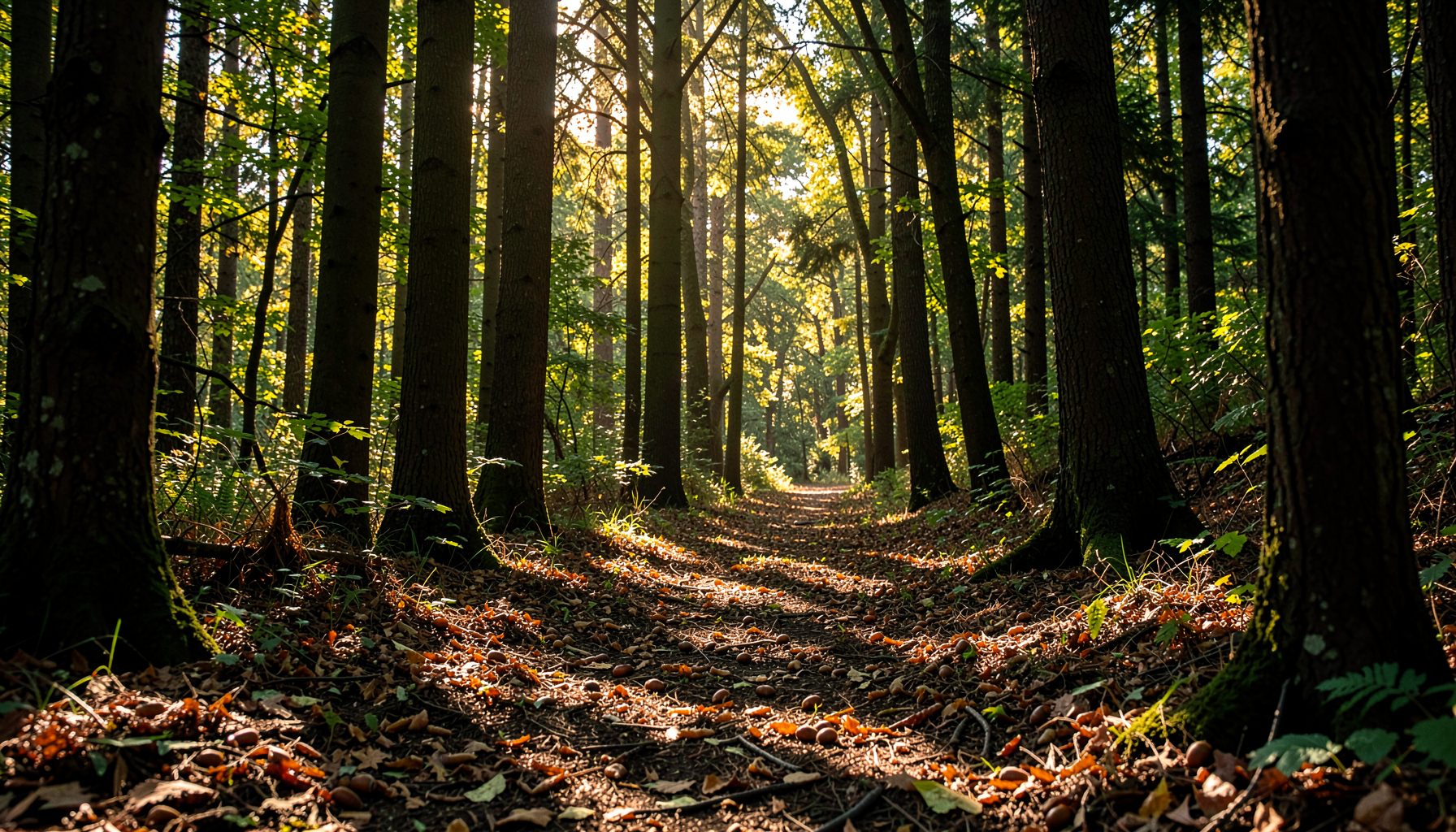
Growing Native and the conservation districts restoring the watershed
Healthy forests and clean streams depend on work that continues across property lines, seasons, and communities. In the Potomac River watershed, Growing Native helps turn local stewardship into a dependable source of native trees by organizing people to collect acorns, walnuts, and other seeds for future restoration.
That effort becomes stronger through cooperation with local conservation districts. These public-service organizations understand the land, water, farming communities, and restoration priorities within their counties and regions. Their knowledge helps connect seed collection with places where new streamside forests can provide lasting ecological value.
The partnership brings together community energy and conservation expertise. Volunteers contribute time and attention, while district staff and other restoration partners help identify needs, coordinate projects, and support responsible land management. The result is a practical pathway from a native seed on the ground to a tree protecting a stream years later.
A partnership rooted in local knowledge
Conservation districts work close to the landscapes they serve. They often assist landowners with soil health, erosion prevention, riparian buffers, agricultural conservation, stormwater concerns, and watershed planning. Because their work is local, district staff can recognize where forest loss, unstable streambanks, or excessive runoff create the greatest risks.
Growing Native adds a community-based seed collection network to that local perspective. Rather than treating reforestation as a distant project, the program invites families, schools, workplaces, and civic groups to participate in the earliest stage of forest recovery. Volunteers learn to identify native hardwoods and shrubs, gather viable seed, and handle it carefully for delivery to state nurseries.
This relationship also supports better communication. Conservation districts can share information about regional priorities, while Growing Native can help residents see how seasonal activities connect to broader watershed goals. A person collecting acorns may be contributing to a restoration process that includes nursery propagation, site preparation, planting, maintenance, and long-term monitoring.
From seed collection to streamside planting
Native seed collection requires timing, observation, and care. Acorns and walnuts must be gathered when mature, sorted to remove damaged material, and handled according to guidance that protects their viability. Educational resources help volunteers recognize trees accurately and understand why locally appropriate species are valuable for forest restoration.
After collection, seeds are donated to state nurseries, where they can be grown into seedlings for conservation planting. Those seedlings may eventually become part of a riparian buffer, a floodplain forest, or a reforestation project along a vulnerable waterway. Conservation districts help make this connection meaningful by identifying the types of restoration that communities and landowners need.
People interested in participating can use Growing Native’s collection site information to find opportunities and understand how local events fit into the larger program. A single collection day may seem modest, but a coordinated network can produce thousands of seeds that support future planting across the watershed.
The process also builds patience into environmental stewardship. A seed gathered in autumn may spend months in a nursery before becoming a seedling, and that seedling may need years of protection before it provides substantial shade, root structure, and habitat. Local conservation districts help keep attention on this long-term sequence rather than on short-lived planting events alone.
Shared work, measurable watershed benefits
Streamside forests perform several jobs at once. Their roots hold soil in place, their trunks and branches slow floodwater, and their leaf litter supports aquatic food webs. Shade from mature trees can help moderate stream temperatures, while vegetation filters nutrients and sediment before runoff reaches the water.
The partnership between Growing Native and conservation districts supports these benefits by connecting seed supply with practical restoration planning. When native trees are established in appropriate locations, they can strengthen stream buffers and contribute to healthier headwaters, tributaries, and river corridors.
| Partnership activity | Local conservation value |
|---|---|
| Collecting native acorns and walnuts | Builds a reliable supply of regionally appropriate planting material |
| Educating volunteers about tree identification | Improves seed quality and strengthens ecological awareness |
| Donating seed to state nurseries | Supports production of seedlings for public and private restoration |
| Prioritizing streamside and watershed projects | Directs effort toward erosion control and water-quality goals |
| Involving schools and community groups | Creates long-term stewardship and local conservation knowledge |
| Coordinating with landowners and agencies | Helps restoration projects fit local site conditions |
These outcomes are cumulative. A healthy buffer may reduce sediment entering a creek, provide habitat for birds and pollinators, and make a streambank more resilient during heavy rain. When many small projects are connected throughout a watershed, their combined effect can improve ecological function at a much larger scale.
Protecting native diversity along waterways
Planting trees is most effective when the surrounding ecological community is considered. Native species support insects, birds, mammals, fungi, and other organisms that evolved alongside them. A diverse mix of hardwoods and shrubs also creates layers of vegetation, from low cover to mature canopy, giving a restored site greater structural complexity.
Invasive plants can interfere with that recovery. They may crowd out native seedlings, alter soil conditions, reduce habitat value, or prevent young trees from reaching the canopy. Growing Native explains the threat of invasive species so volunteers and restoration partners can understand why site preparation and follow-up care matter.
Conservation districts are well positioned to reinforce this message with landowners and local groups. They can help identify invasive species, recommend appropriate management practices, and encourage maintenance after planting. Removing competition before and after installation gives native seedlings a better chance to survive and develop strong root systems.
Species diversity also helps forests respond to changing conditions. A varied planting palette may be better able to withstand pests, disease, drought, flooding, and temperature shifts than a single-species planting. Local guidance can ensure that restoration choices reflect soil, moisture, sunlight, and floodplain conditions rather than relying on a uniform formula.
A practical role for every community
Partnerships work best when participation is accessible. A school can use seed collection to teach botany, life cycles, and watershed science. A family can learn to recognize native trees during a weekend walk. A workplace or community organization can organize a collection event that combines service with outdoor education.
Volunteers do not need to be forestry professionals. They need clear instructions, a willingness to learn, and care in following collection guidelines. Growing Native’s educational approach helps people understand why clean seed, accurate identification, and proper handling matter to the success of future seedlings.
Conservation districts add another layer of practical support. Their local relationships can help connect volunteers with landowners, educators, municipal programs, and restoration campaigns. This coordination reduces duplication and gives people more ways to contribute, from collecting seed to helping with outreach, planting, monitoring, or invasive plant control.
The benefits reach beyond the immediate task. Participants become more familiar with seasonal changes, native species, stream health, and the effects of land use. That knowledge can influence everyday decisions about landscaping, runoff, soil protection, and habitat on private property. In this way, a seed collection program becomes part of a broader culture of watershed stewardship.
Ways to strengthen local restoration
The most effective participation is consistent and connected to local priorities. Individuals and groups can support the work by choosing roles that match their time, skills, and access to natural areas.
- Join an organized collection event and follow instructions for identifying and handling native seed.
- Invite a school, workplace, faith community, or civic group to learn about forest ecology and watershed health.
- Share local observations about streambank erosion, invasive plants, or areas that may benefit from additional tree cover.
- Support landowners and restoration partners by respecting collection-site rules and protecting planted areas from disturbance.
- Continue learning about native trees so seasonal stewardship becomes a regular community practice.
These actions help conservation districts and Growing Native maintain a dependable cycle of engagement. Participation is especially valuable when it returns each year, since seed production varies by species and weather. Repeated involvement also builds local confidence: volunteers become more skilled, organizers gain experience, and communities develop stronger relationships with the people managing restoration efforts.
The partnership depends on trust and clear responsibilities. Volunteers collect responsibly, program staff coordinate the seed network, nurseries grow planting material, and conservation professionals help guide restoration toward suitable sites. Each part supports the others, creating a system that is more durable than an isolated event or a short-term campaign.
Help grow the next generation of forests
Growing Native’s partnership with local conservation districts shows how watershed restoration can begin with ordinary seasonal acts. Collecting an acorn, learning a tree’s name, or bringing a community group outdoors may seem small, yet each action can contribute to cleaner water, stronger streambanks, richer habitat, and forests that serve future generations.
Support the work by taking part in a local seed collection opportunity, sharing the program with an organization you belong to, or using its educational resources to start a conversation about native trees. With steady participation and local conservation guidance, communities can help transform native seed into a living network of streamside forests across the Potomac watershed.